I am really glad you might be spending a great time with your family during “Navidad.” I am very curious to know how do you celebrate these festivities.
For me, it is not a really special event. Maybe it is just because I cannot spend this celebration with my family. They all live in Santiago, as I probably mentioned before. We mainly have a delicious dinner at home with my brother, sister, mom and dad.
I invited my mom to go for some shopping to Osorno. I wanted to buy a laptop because I will need it in order to study languages during this summer, as well as I design some projects for next year. In addition, I want to have a video conference with you, as soon as you manage to use skype or msn or even yahoo…. I took my mother to eat some delcious food at a very popular restaurant among university students. It was my present for Xmas. I am not very good with gifts, so I rather prefer to express my affection by going out somewhere and do something different.
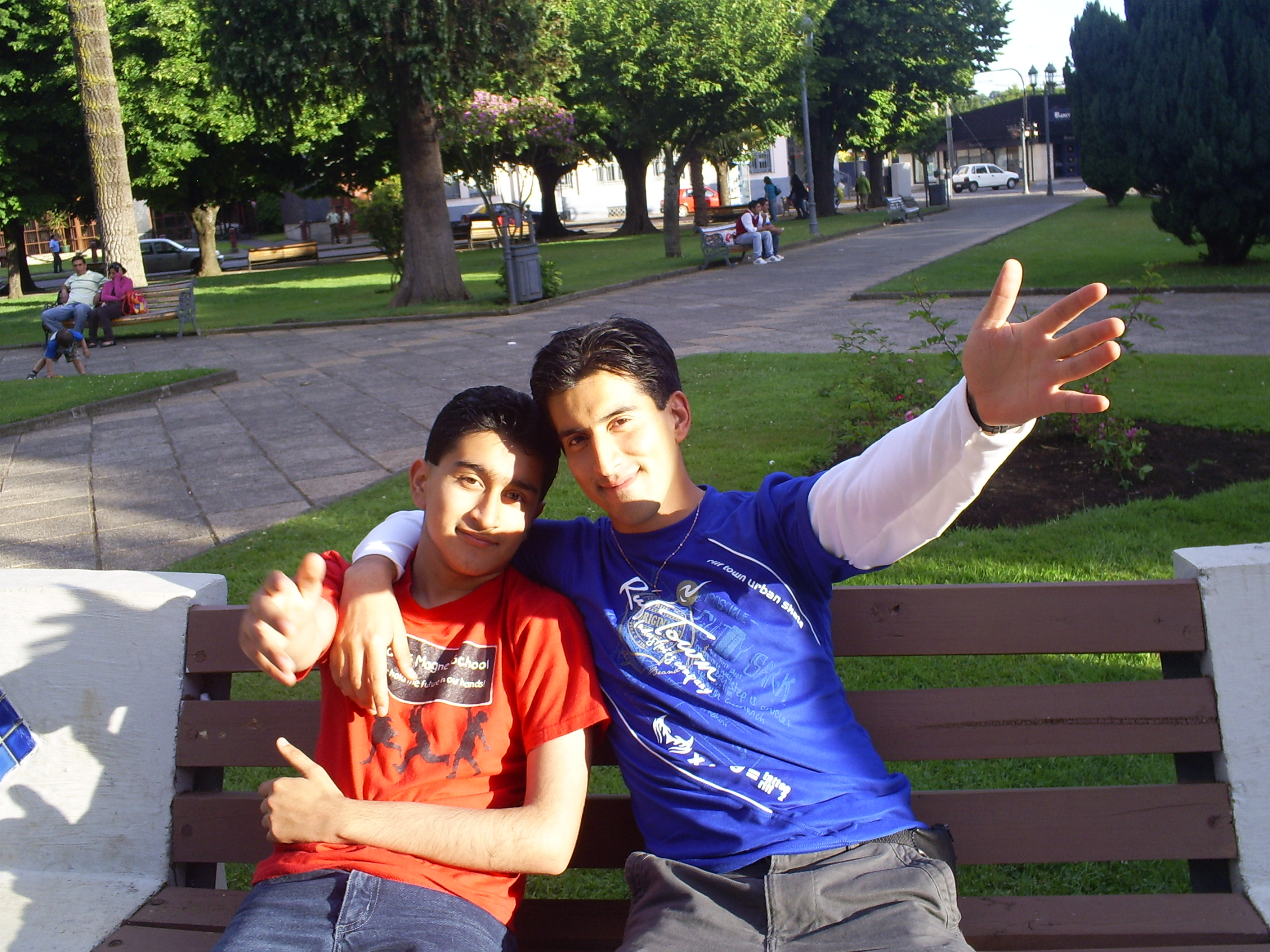
Mi hermano "Jaisson"
Jaisson is my “little” brother, though he is not little anymore. When I came back from Aberdeen, I realize he was a real adolescent (with all its implications). If I want him to behave or to do things right, I need to use psychology a lot. Reasoning and negotiating is really essential. I really love him, and I wish I can be a good big brother.
Te Quiero Mina!!!!
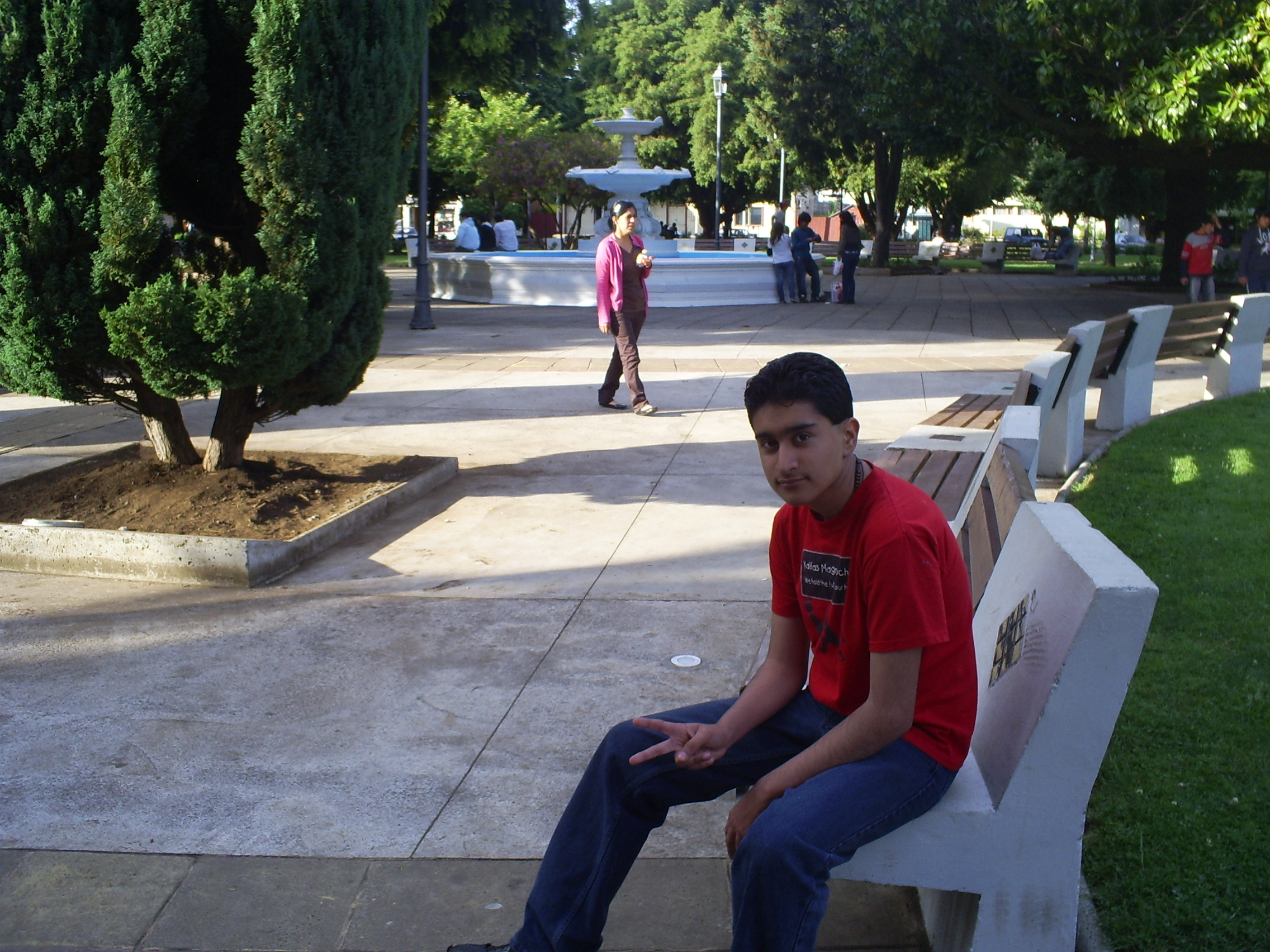
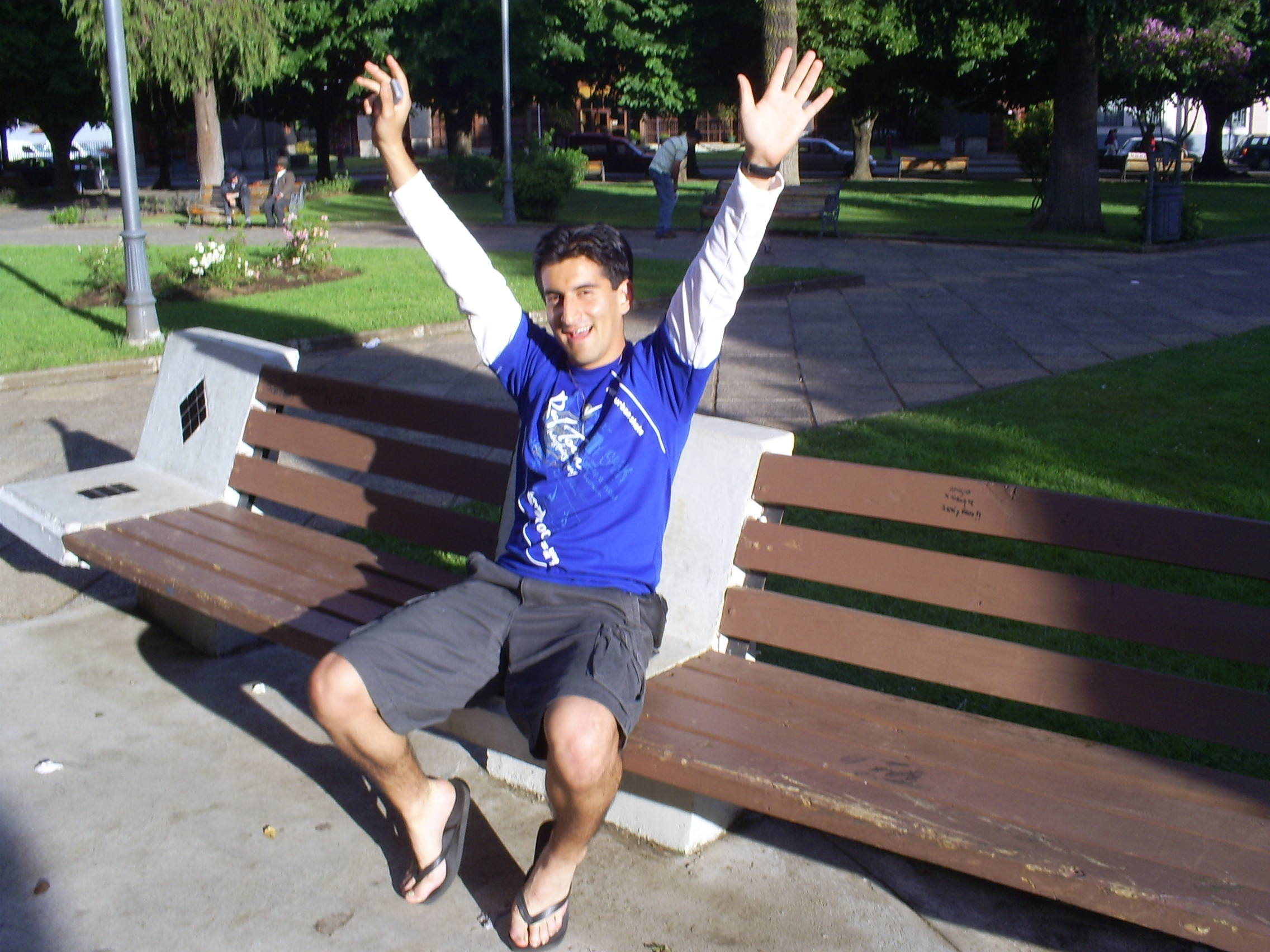
Me and my brother had a walk during the evening, because I wanted to take a few pictures for you. I’ve been so busy lately, that I haven’t been able to write some words for you or to take some photos. We went to the city main square. The day was great… it was sunny and warm.
Saludos Mina-ya!!
In Chile, your “pololo’s” brother can be called “cuñado.” You may call him this way, and he can refer to you as “cuñada.” So, when you come to Chile and you want to greet him or my sister Pía, you can say: !!Hola “cuñado(a)”!!
Navidad at home
When we arrived to home, dinner was not done yet. My mother was listening to Mariah Carey and U2 very aloud (we love music! and rock the house!). I was helping with the preparations while I played a Back Street Boys cd for her. She loves them…jajaja.. we always have fun because I encourage her to dance with me and my brother, acting out any artist we listen to.
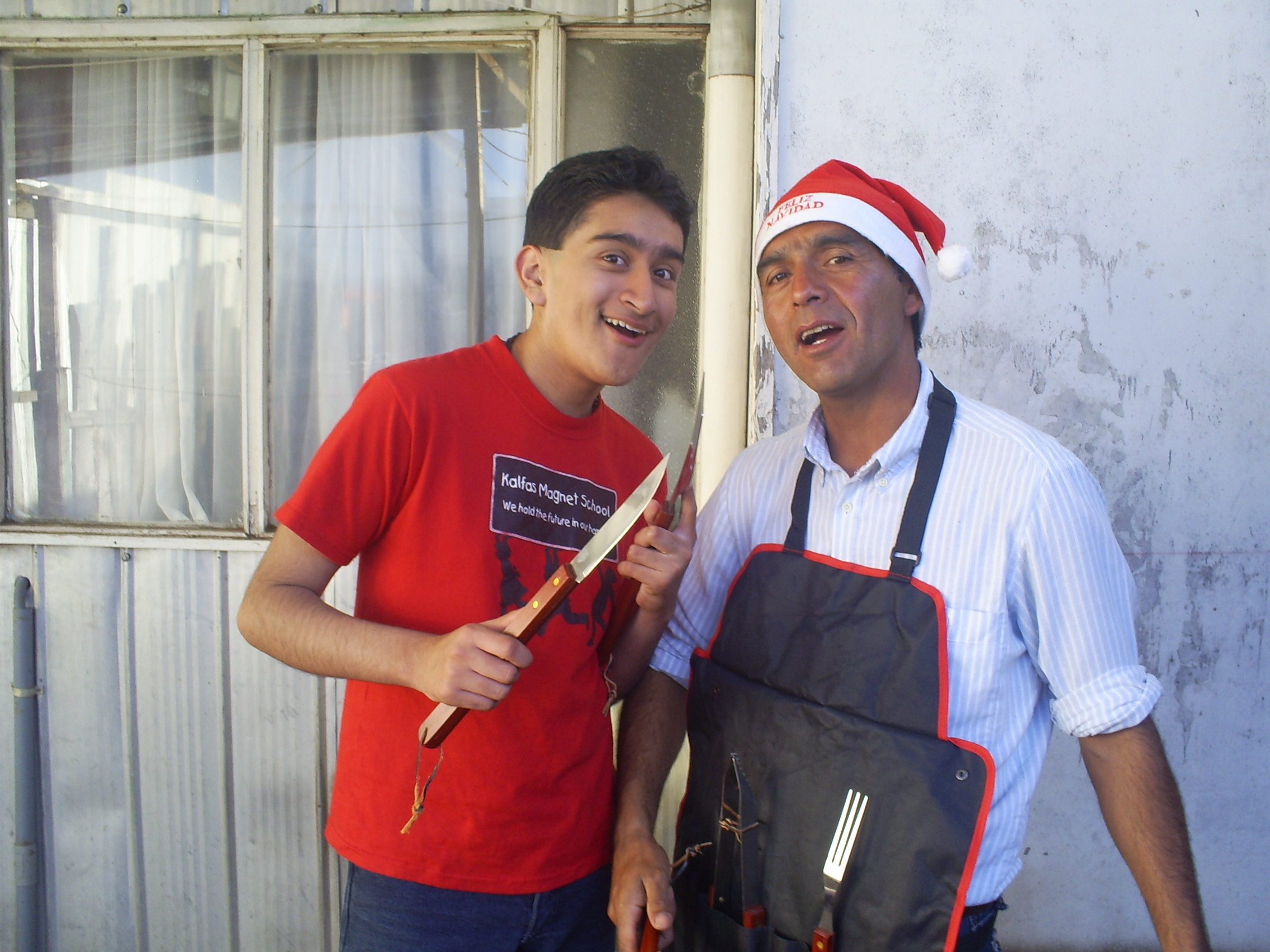
The most important part of a Chilean dinner is the cooking of meat. Many Chileans love meat and to prepare “Asados” (barbecue). We had lots of fun too preparing everything. We didn’t eat any fish or seafood this time.
Cocineros de Asado
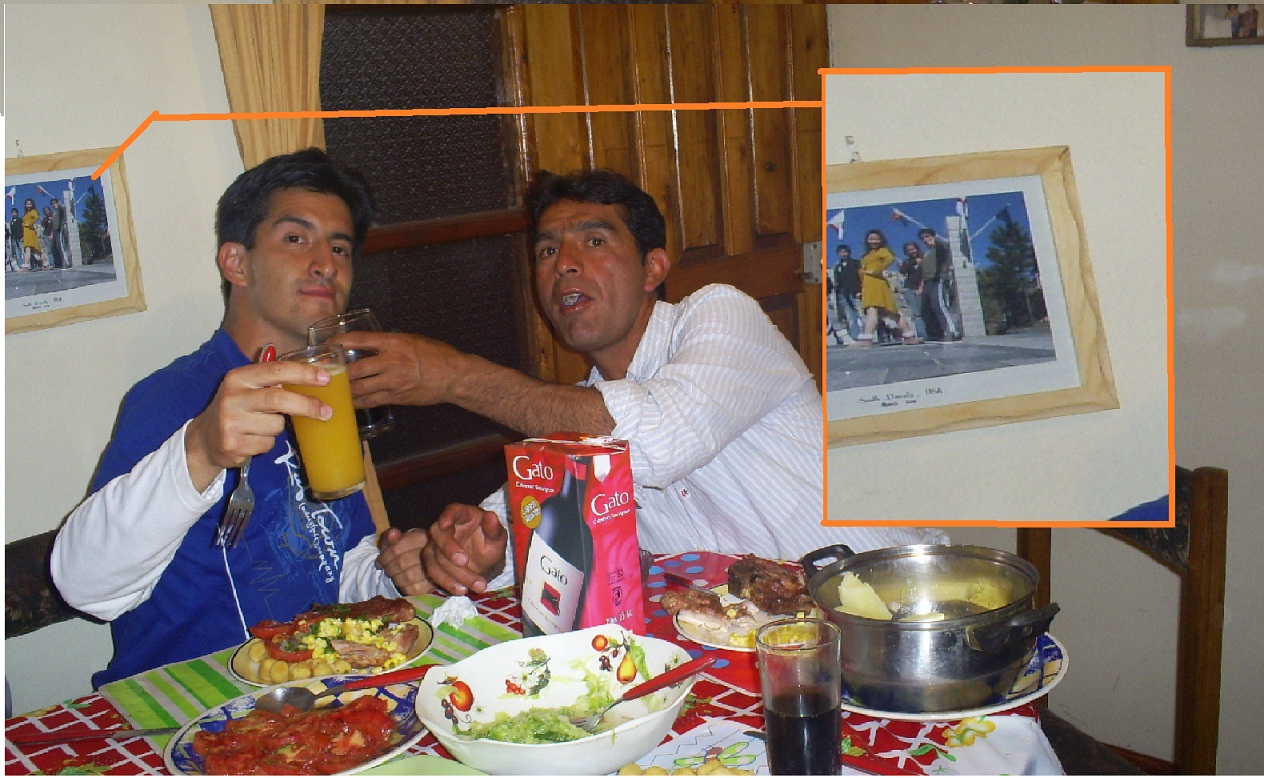
Once the dinner was done, we sit all together and tried a bit of everything. Different kind of meats, corn, tomatoes, lettuce, potatoes, cilantro, etc etc…. nothing really special.
Saluuuuud!
But we made some cheers because we are together, and everything seems to be fine! The problem is, I am not good drinking. So I just picked up a juice glass for this ocation… My family is composed by “Carmen” (mama), Pía (hermana), Jaisson (brother) & Mauricio (Father).
Mi familia
It is almost 3.30 am… I wanted to complete this blog and upload some pictures before you go to bed… I know it is already late there in Korea… time difference is really something strange. But I don’t care… I love you no matter where you are… jajaj!
So, have a coool Xmas! My sincere greetings from Chile to you and your family… Did Santa give you the whole pack of kisses I sent you? they were so many… I think they wouldn’t fit inside Santa’s bag.
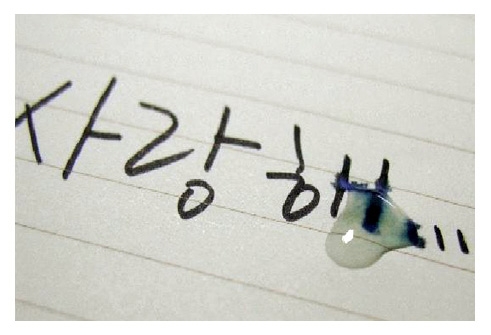
They’re the just three words, besides perhaps “I am gay”, that can make or break a relationship (amazing… isn’t it?). In Spanish they are just two words “Te quiero/amo,” which is quite unique, since our language’s main characteristic is to use several words when expressing. “Te amo ♥.” Such a strong meaningful word, the way it’s said creates a strong feeling of security and comfort. Love is hard to find, hard to express and hard to maintain. So when they have the nerve to say it, they mean it. It’s not in movies, it’s not in books, it’s true and real.
Saying “it” too soon can make you look desperate and insecure, and not reciprocating can break a person’s heart. However, when said at the right moment and with the right person, they can be the most wonderfully touching and exhilarating words one can ever hear.
When is it the right time to say I love you? There are romance novels, movies, songs, poems and many articles on this topic. It’s a hot subject and seems to be a great concern in many relationships, especially new ones. Who should say it first (the nene or the nena?), and when and how should it be said? After you say it, should you say it all the time? Is there a best way to say I love you, or is any way good as long as you say it? Should you say it soft and low or shout it out loud?
Do you remember those times we used to have fun at students center while having some meal? we acted out some funny dialogues in Spanish where you were meant to learn how to talk towards a nene like me who wanted to be your pololo.
Diálogo divertido
¿Me quieres?
♥
Well, let’s try to see how could a Chilean guy like me ask you to be his polola in Chilean Spanish:
Matías : Oye Mina, ¿Quieres ser mi polola?
Hey Mina, do you want to be my polola?
Mina: ¿Me estás pidiendo pololeo?
Are you asking me to be pololos?
Matías: ¡ Sí poh!
(yes) that’s right!
Mina: No sé, dejame pensarlo un poquito.
I don’t know. Let me think about it for a little while.
Matías: Ya poh Mina, dime que sí.
Come on Mina, say yes.
Mina: No, ya no te quiero.
No. I don’t like/love you anymore.
Matías: ¿Porqué?
Why?
Mina: Porque tú eres muy pollo.
Because you are “pollo”
Saying “Ya no te quiero” is literally translated as “(I) already don’t like/love you” ~ or just I don’t love you anymore. It is quite useful if you want to break up with a Spanish speaker pololo. It is also possible that some other guy asks you “Mina, ¿Quieres ser mi polola? then you can reply either “Claro!” (sure!) or “¡No quiero!” (I don’t want to).
An appropiate song
Since we are learning how to say “ya no te quiero,” It will be really funny if you listen to one of my favourite songs in Spanish. It’s Ana Torroja’s song. I hope you like it.
I have to say that I am the kind of person who do not always let the rest of people know what is on my mind. The only exception is when I met someone who catches my attention. It’s only then when I try to show the other person know how much I appreciate him or her.
It’s an unwritten rule that you should never be the first one in the relationship to say ‘I love you’, purely because this prevents you from seeming desperate and obsessed. But aren’t all rules there to be broken? After all, someone has to take that leap of faith. The ultimate outcome should be that you touch the heart of the one you love. It is a great accomplishment to touch someone’s heart. In addition, survivor like “US”, shall be willing to take the risk as long as we keep loyal to our inner feelings! That’s why I won’t get tired of telling you how much I miss you… and love you…! ♥
The current president in Chile is Mrs. Michelle Bachelet. She is the first woman president in Chilean history, and probably, in many countries from South America… I don’t know how about the rest of the world. Don’t you think it is great that women have a high level of participation in State affairs? She is very intelligent, and charming too. She owns a high support from Chilean population.
Michelle Bachelet
The Chilean presidential election of 2009 is scheduled to take place on Sunday December 13 2009, with a run-off scheduled for January 17 2010 if no candidate gains more than 50% of the valid vote. Parliamentary elections will take place on the same day.
The electoral process is supervised by the Electoral Service (Servicio Electoral), which is independent from the government. In fact, I have been choosen to be part of this process like many Chileans (particularly if they are teachers). I have to spend the whole day of elections supervising votes. The elections take place at Chilean public schools. We receive the name of “vocal” when you are summoned for this event.
In Chile, you can vote if you are over 18 years old. All you have to do is to sign in at the city hall and you become a fully Chilean citizen. Enrollment in Chile is voluntary, however, once electors are registered, it is compulsory to vote in each and every election, except for foreigners, whose vote is always voluntary. Chileans are not allowed to vote overseas. Some young people do not believe in politics very much, but I really think that we need to care about it. Even if we don’t really like it, Politics are essential for the development of a good and successful society.
There are four candidates who want to become the next Chilean president:
Eduardo Frei
Concert of parties for democracy
Candidato n° 1
He represents the “concertación” party. I am not pretty sure, but it is probably a conservative party which is located in the middle, with a little bit tendency towards left. He became president in 1994, and now he tries to be president again. During that period, Chile started to make the economic deals with Asian countries like yours.
Jorge Arrate
Together We can Do more
Candidato n°2
He is member of the Communist party of Chile. We can say it is the new Left wing party. Among the four candidates he probably has the lowest popularity because Communism is a very small party in Chile. However, his ideas are probably the most relevant for people and labour force.
Marco Enriquez-Ominami
Independent
candidate n° 3
He is not part of any popular Chilean party. I guess it is called “Broad Social Movement.” His ideas are quite interesting and new because his proposals intend to make real changes in our current laws, economy and society. He is the youngest and catches everyone’s attention because it is not common that independent candidates would have a chance to be a president unless they form part of a bigger party.
Sebastian Piñera
Coalition for Change
candidato n° 4
Mr. Sebastian Piñera represents the right wing party in Chile. He is the leader of a huge coalition party also called “National Renewal.” It is considered that right wing party gives priority to economy as a capitalist view of country policies.
Who am I going to support??
That’s a good question! but first, I really would like you to tell me if you do vote in Korea and how is the election process. which party do you think you share ideals… etc. And of course! why don’t you tell me which candidate do you think looks more trustworthy? even if you don’t know them…
It is really hard for us (western language speakers) to find the boundaries of Asian words. I am still at a very elementary level of Korean language knowledge. However, my intrinsical motivation towards learning your language is based on my deep affection and determination towards being with you soon, and my survivor way, of course! ♫
ohh! Mon amouuur! ¡Je t'aime ! ¡Je t'aime! ♥
Mina’s Secret message
오 이거 너무 감동적이다
This is so touching/imprssive (probably “conmovedor” in Spanish)
나에게 너처럼 멀리서 나를 그리워하고 걱정해주는 이가 있어
you care (are concerned) about me
진짜 감격스럽다
I am really thrilled/deeply moved?
네 말대로 우리가 떨어진 거리가 뭐가 중요하겠니?
~ I looked up for the words isolated… but can get the question clearly ~ like… we are far.. what is important… 😦 ?
마음이 함께 한다고 느끼면 충분한걸…
mmm…. I found hear/soul/mind …. together… feel… something good enough… ?
넌 나에게보석같은 존재란다
you.. to me… I don’t understand the use of “Gem” 늘 고맙다.
I always thank you
Interpretation
What I can get from this message… doesn’t let me clearly understand if you “me extrañas” – “me quieres” o “me amas.” I would like you to help me how to translate it properly. Could you explain each sentence? You will be my “bella” y “sensual” profesora coreana ♥ .
The last two months were quite interesting but stressing at once. I’ve been moving from my home city to those places where I’ve been holding my art exhibitions. In addition, I need to keep up with my “not that funny” 😛 teaching studies, waiting for my graduation.
The most unexpected event… it was obviously my little accident when I broke my wrist (not really serious) being unable to finish some of my new designs I wanted to show. I broke my wrist during a judo tournament, so I had to spend almost a whole month without completing any artwork. that was surely a hard time for me. I couldn’t conceive not doing what I enjoy most! I was thinking of some very interesting subjects, like the Chinese Opera and of course, my dear friends from NSU… I really miss them all!
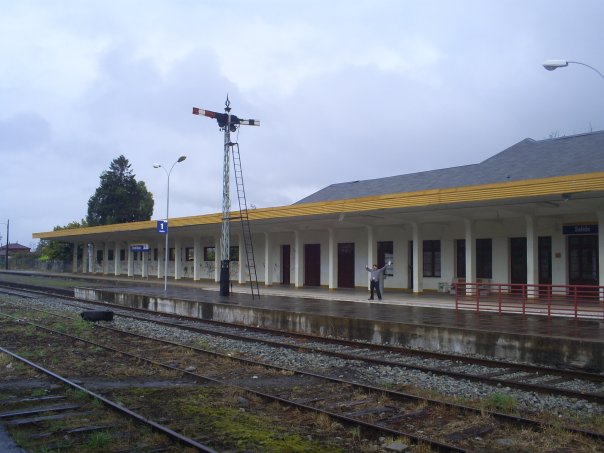
Centro Cultural Estación
I was proposed to show my drawings at a certain train station in Puerto Varas. As I mentioned before, “Centro Cultural Estación” is actually a train station. So, you can take a look at the rails located in the back of this building… ! I love train stations! ♫
Centro Cultural Estación
Now I really felt like keeping the idea of holding art exhibitions in such particular buildings like this one. I will try to know if it is possible to do the same in the next destinations. Those Classic train stations made me recall those times when I was a child and I used to travel from South to north by train!
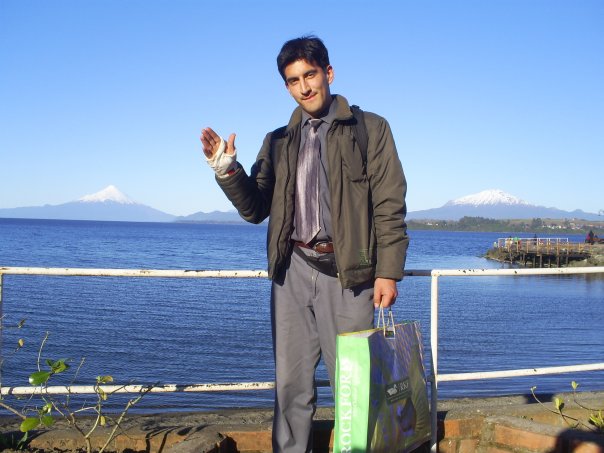
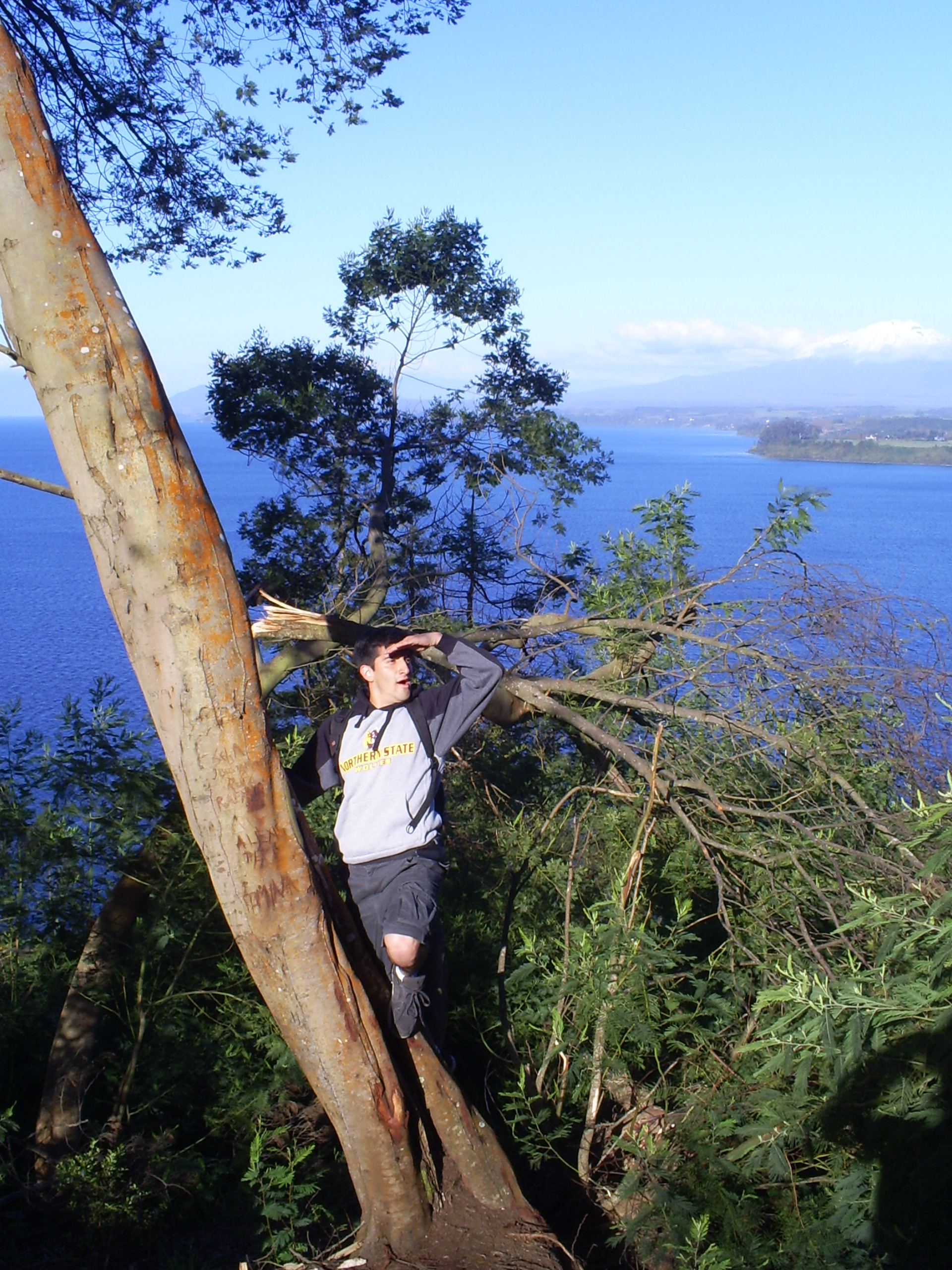
¿Me puedes ver? (Can you see me??)
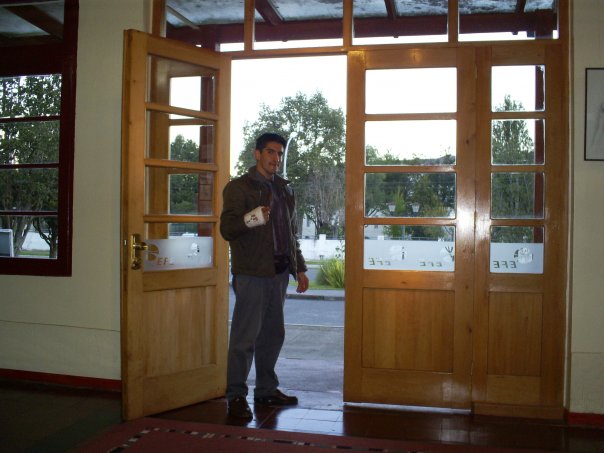
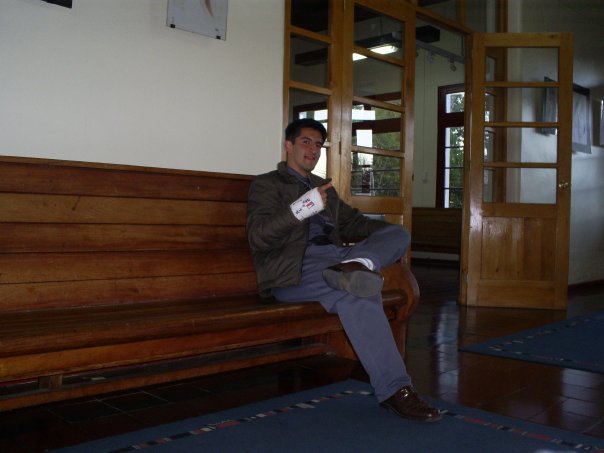
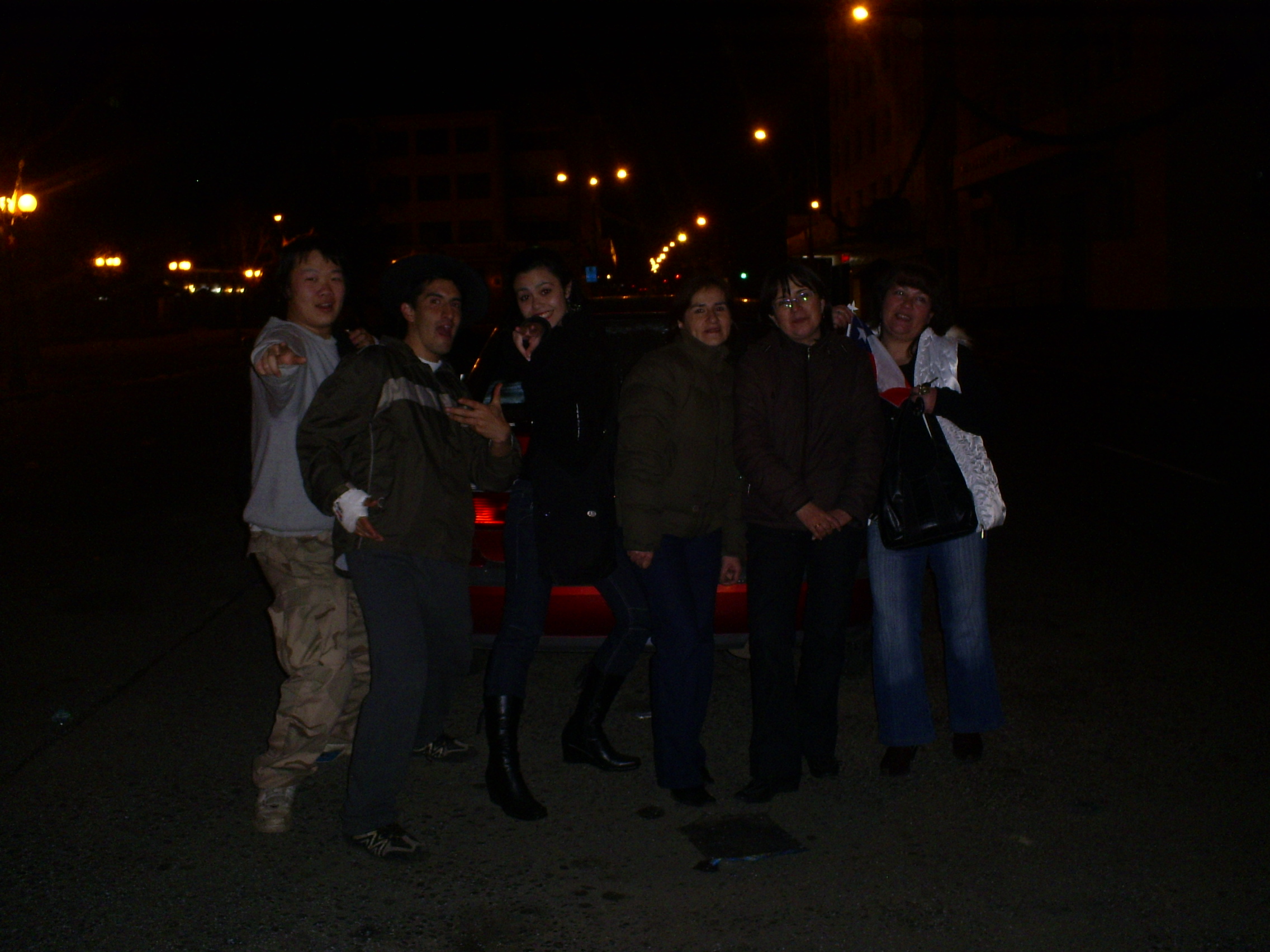
Finally…. the weather got a little bit better…! (compare it with the previous post) Now it was possible to see the volcanoes at the back of this photo… I just took this picture when I had to make the final preparations for the art exhibitions… you can also appreciate my broken wrist… I am wearing some plaster on it… for a few weeks… unfortunately… I cannot make new drawings… 😛
안녕하세요!
At the end of September, everything was ready for the next art exhibition in “Puerto Varas“. With the essential and lovey help of Dimka, I managed to take my artworks from “Los Muermos” to Puerto Varas, a nice and beautiful town located just in front of a cool lake. Some old and new drawings were shown, but I kept some secret drawings unfinished anways.
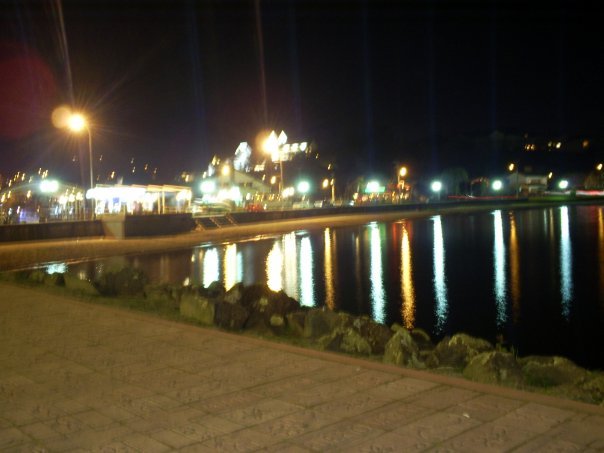
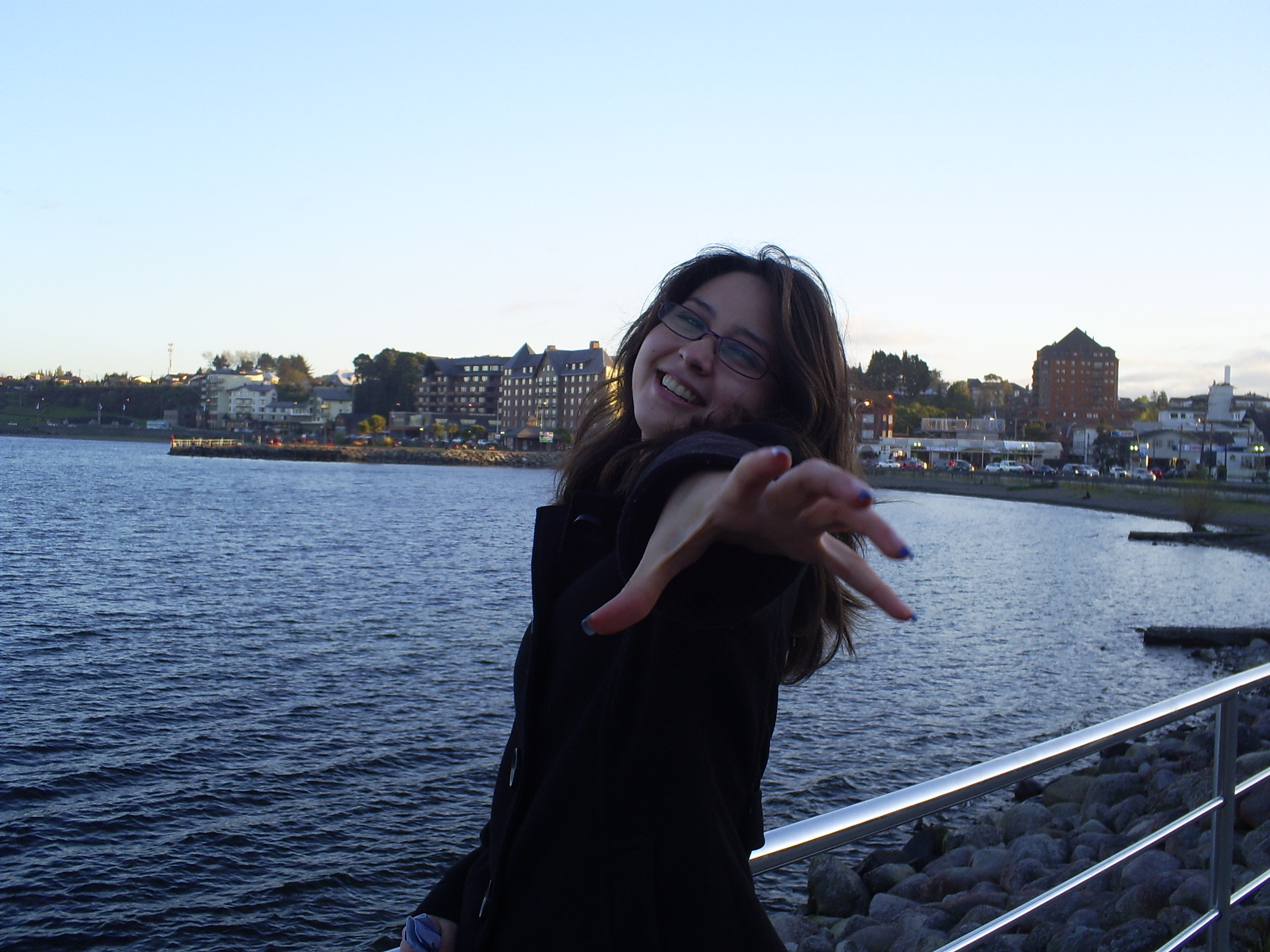
Ufff!! that was surely a looong day. I just bought my bus ticket and waited for almost 30 minutes just sitting down in front of the lake. That was quite relaxing! ♥ I had a time to think about you looking at the beautiful horizon covered with a dark night time colour only illuminated by the city lights.
Puerto Varas at night
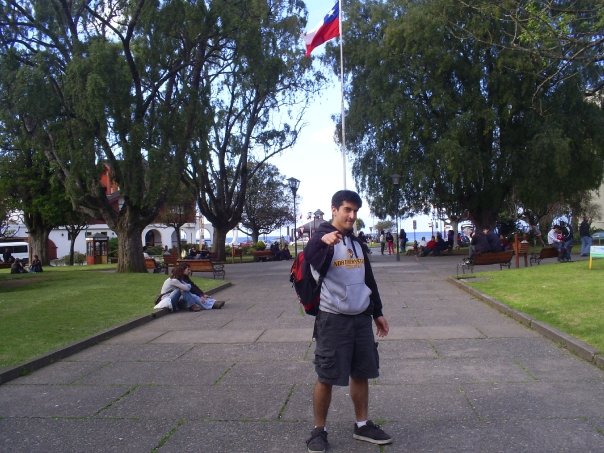
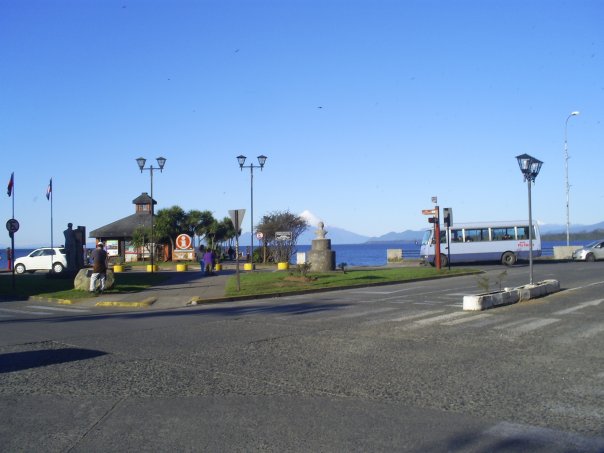
I took this picture from the main square. The artshow is located going towards left…
Plaza de Armas
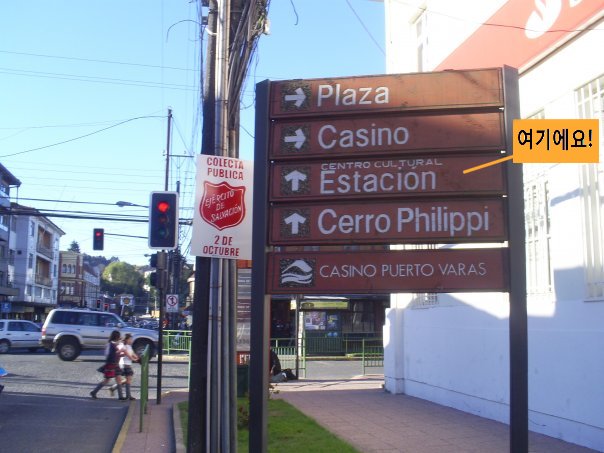
Can you see the directions given?? Centro cultural estación is located just going straight ahead this street! Only “pollos” would get lost in Puerto Varas.
Centro Cultural Estación, 어디에서요?
This is how an old train station main entrance looks! To the left of this picture, you can read “boletería”. This is the place where you were supposed to buy the train tickets in the past. Like in old times, people used to sit down in these kind of halls waiting for their train to arrive. Today, they sit down to appreciate Chilean artworks!! ♫
Entrada Principal
Derrick and Karina!
This north american guy is from Virginia. He is part of an assistanship program promoted by our government. He is giving some kind of classes. Karina and me are part of his class. I invited them to visit my art exhibition and we went to Pto Varas together. We spent the whole afternoon having fun around town and outside too.
Derrick y Karina
Such a ‘buena onda’ Venezuelan friend is always a nice company for this kind of events. Karina is always willing to go any place we could think of! ¡Bueeeena Karina!!! ♫ Karina Vargas is one of my English teaching classmates at University. She is from Venezuela and we became very good friends in the first year of our major. As I told you, Venezuelan speak particularly different from ours. Only in terms of some vocabulary, pronunciation and stress. I think it is quite funny to hear them; but they sound lively and friendly, like you want to be their friends.
Amiga Venezolana
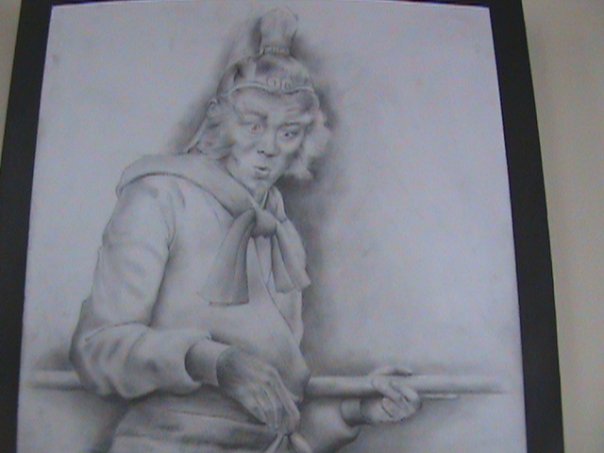
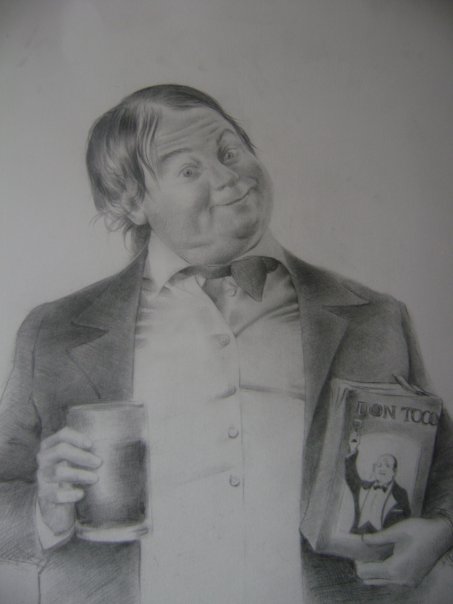
The artworks
Everybody wanted to know who this particular character was. I explained them he is an ancient Chinese Literature character. I surely feel like making this drawing again. The paper I bought in Aberdeen was not appropriate for my drawing style. You will see the next version soon!
Rey Mono (sun wu kong)
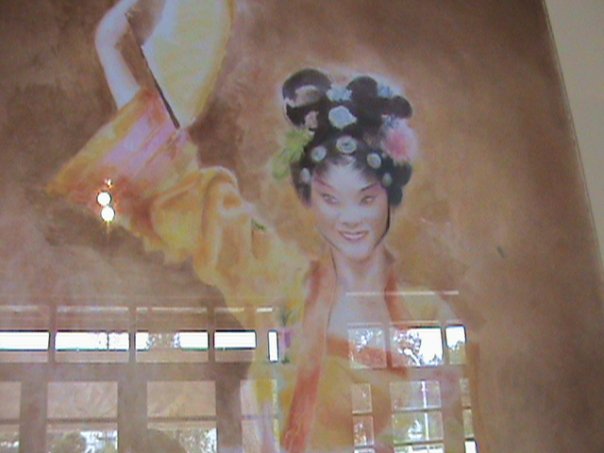
Before I got my wrist broken, I had started to design this Woman. She is supposed to be a Chinese Opera actress. I am completely amazed and enchanted by the huge number of accesories and colorful costumes they wear. Since I love details, it is quite challenging to complete one of this. It is still in process, but I wanted to include it anyways. Now I am waiting for you to give me an idea of which subjects from Korean culture I should portrait.
Chinese Opera actress
I obviously showed almost all my artworks, including yours!! ♥ (but you will see it in my next letter.. jajaja!
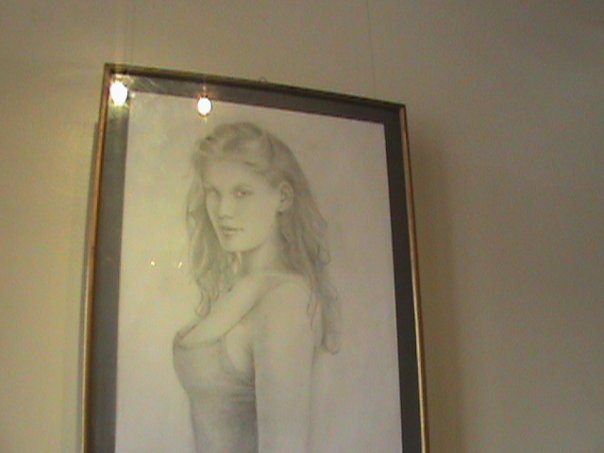
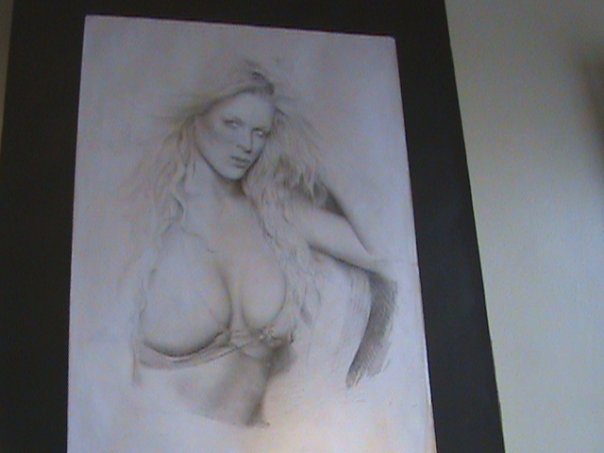
Fan Dance
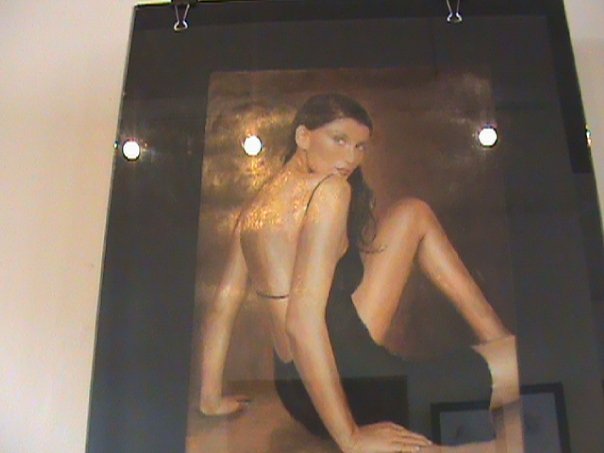
Laetitia Casta
YA lo viste...
Mujer bonita
Che Copete
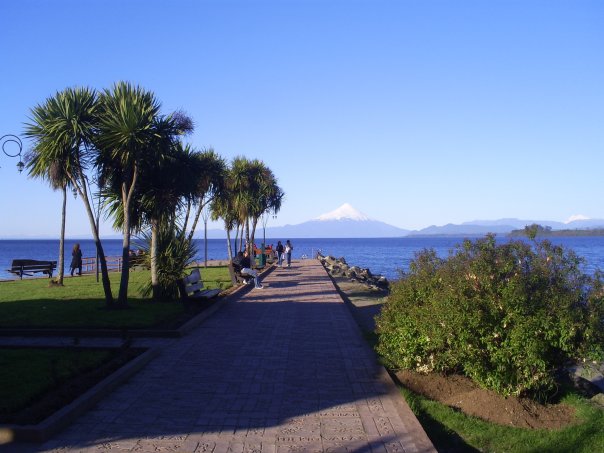
Puerto Varas Coast
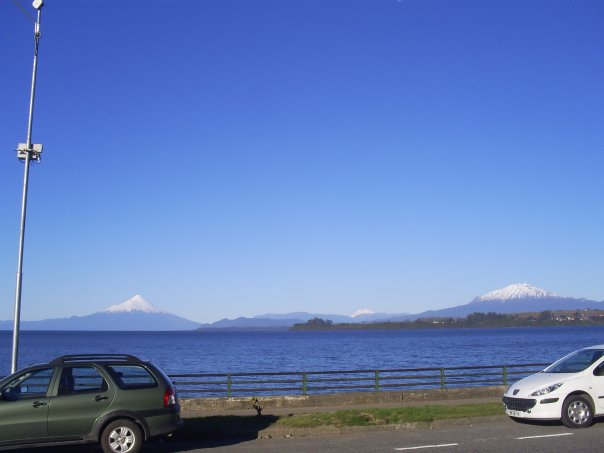
This is Pto Varas “coast”… as I probably mentioned somewhere… I love places with some H2O close to them… and this is what I was expecting to see.. those huge volcanoes during spring time… just when the weather is nice enough to enjoy the cool scenery of this Lake!
Volcan Osorno
Costanera
Volcán Osorno y Volcán Calbuco
I was looking for you! Ya poh Mina!! Dónde estas?I really miss you so much…
청미나 ! ¿Dónde estás?
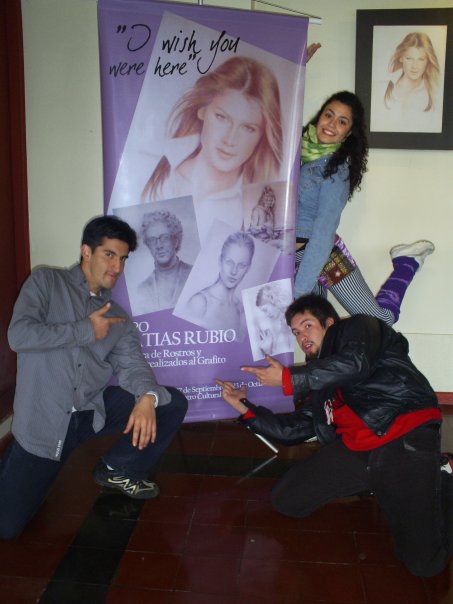
You missed it! that’s a real fact!! Come to see Pto Varas art exhibition! – These are my friends too: Cony is from Osorno and Andro is from Santiago, like me. Did you read the title of this art exhibition?? I was probably thinking about you when I wrote it down!
¿Qué pasa? ¡Te lo estas perdiendo!! ♥
10. I took this picture from the main square. The artshow is located going towards left…
Being so far from you is surely the most interesting experience I’ve ever had before. I It is a mixture of sadness, tenderness, anxiety, etc. William Shakespeare wrote once: “All days are nights to see until I see you, and nights are bright days when I dream about you” (I paraphrased it a little because it was written in old English). This phrase beautifully tells about the feelings of a person when he is separated from his beloved. Even “Dryden” (another poet) says: “Love reckons hours for months, and days for years; and every little absence is an age.” The feeling of missing someone is special. On the one hand, it gives you pain and on the other, it makes you realize how important is a person in your life. You tend to see your beloved everywhere and whenever you are free from those stressing activities of your daily routine. When her image comes to your mind, you are taken to another world that moves around her thoughts only.
보고 싶어요!
Music is art, and that’s why it is closely related with the way I see life. I love music, specially because melodies and sounds they can exactly tell what our feelings have to say about something. The harmony between melody and a beautiful voice is what I appreciate most. (I guess everyone does)
Love songs and distance
After I wrote this post, I happened to listen a very nice (and romantic) song which is just related with this topic. When I listen to it, the lyrics manage to touch those inner feelings within my heart. I don’t know if you have experienced something like this before. Artist must be able to recall previous experiences and memories and bring back the emotions and feelings involved in order to pour it on canvas, sketchbook or etc. It is in Spanish, and the singers are two guys: one of them is from Mexico and the other one from Argentina. This song tells about a man who is far from her lover and how he do not care about distance. If you like it, I will translate it for you.
y siento como un cambio armónico
va componiendo una canción en mi interior
Sé que seguir no suena lógico
pero no olvido tu perfume mágico
y este encuentro telefónico
me ha recordado que estoy loco por ti
Que todo el mundo cabe en el teléfono
que no hay distancias grandes para nuestro amor
que todo es perfecto cuando te siento
tan cerca aunque estes tan lejos
A varios cientos de kilómetros
tiene un secreto que decirte mi dolor
en cuanto cuelgues el teléfono
se quedará pensando mi corazón
Que todo el mundo cabe en el teléfono
que no hay distancias grandes para nuestro amor
que todo es perfecto cuando te siento
tan cerca aunque estes tan lejos.
I really wonder to know if you have been practising some Spanish since I am gone. If you haven’t, don’t worry. I will be more than glad to teach you some common Spanish phrases and sentences for you to learn. They are meant to be used with me during our conversations by phone, and of course, if you have the chance to meet some Spanish speaker around there.
Lección uno: Hablando por teléfono
It should be quite convenient for you to learn how to answer the phone whenever I call you, right? There are plenty of phrases you can use, so pay attention 🙂 –
¡ring-ring! ♫
I. Saying “Aló?”
There is a very easy expression you can use when answering the phone. We usually say: “Aló?” it can be used for both speakers in order to make sure there is someone on the line. it is also a good strategy to hear the other speaker’s voice and confirm you called the right number, even before asking… jaja!
Alóoo!!!? ♥
note: it can be used in both formally and informal situations, so don’t worry about when to use it.
II. Quién es?
The second step is to ask how am I talking with in order to confirm if we are talking with the right person, don’t you think so? Then you have to say: “¿Con quién hablo?” ~ Literally translated, it is “With whom/who speak?” don’t forget that, like Korean language, we tend to omit the subject of sentences, just like when I say – Teamomucho (Iloveyoua lot) – “I” is not present. The other speaker can reply to this : “Soy Matías“. If the person also wants to know who is calling, he can also ask the same question or “¿Quién es?” – lit. : Who is it?
If you notice that when hearing the other person’s voice and somebody “else” answered the phone, what you can do is to ask “¿Estará Matías?“ It literally can be translated as – Would/Will be Matias? – The person will answer yes or not, depending on each situation, and you probably know how to replay to this, right? (Sí está / No está)
¿Aló?... ¿Quién es?
III. Saludando
Now you are completely sure that you are talking with me. The first thing I do when talking with somebody I really miss is to say with a lot of enthusiasm: “¡Kiubo Mina! ¿Cómo estay?” – It means Hi Mina, How are you? – If you are talking with somebody who is not your nene (because I am your nene) you can just say: “¡Hola Matías!, ¿Cómo estás?” The answer for this will vary depending on your mood, right? well… the possibilities are:
a) ¡Bakán! (also “muy bien“) which means that you are very fine!
b) Más o menos, which means literally – so, so –
c) Mal, which means that you are not feeling good.
Kiuuuubo weon! ♫
IV. Qué pasa?
I obviously will ask you why? in order to know what happened. The Spanish equivalent for this: “¿Porqué?” or “¿Que onda?” Qué onda is a little bit informal, mainly used when talking with friends or people you have a good and close relationship with. The normal way to ask is what happened or what’s going on is “¿Qué pasa?“
There must be many reasons for being glad or sad, right? Let’s think you are talking with me, so:
a) you are “bakan” because: “Porque estoy contenta de hablar contigo” (Because I am glad to talk with you) please note that “contenta” is used for women and “contento” is used if the speaker is a man.
b) you can be “mal” because: “Porque te extraño mucho“ ♥ (because I miss you a lot/so much) if you want to sound really like missing someone, you can emphasize “mUUuuuucho.”
Matías... Te quiero muuuuucho! ♥
V. Disculpa!
Chileans like to interact and talk a lot. This is part of our South American lively and sometimes cheerful personalities. I wonder if Koreans like talking on the phone quite a lot. Most of my friends talk a lot with their “pololas or pololos” for a long period of time. Personally, I don’t like cellphones because it cannot compare with being in front of the person you are interested in. I exclusively use my phone for job activities or emergencies. If I need to see someone, I just pick up my bycicle (or walk) and visit him/her. And of course, we usually stay talking and talking until very late. Does the same happen with your friends in your country?
I miss you muuuuuucho! ♥
VI. No me interrumpas!
Another curious thing you probably realized when speaking on the phone is that we tend to interrupt the other person’ speech. Please, it is just the way we are. It is expected for you to do the same just after one of the speakers makes a pause on their speech. The same happens when I talk to Eric or Nancy Hartung. If you want somebody to stop talking, you just can say: “¡Cállate weon!” – cállate in English means shut up and weon, will depend on who are you talking to, and your intonation. If you want to sound formal, you can also say “¿Podrías callarte?” (could you please shut up? – it sounds more polite, doesn’t it?).
note: Always remember that “cállate weon” can be used also when somebody whose presence is unpleasant. In this case, you are telling him(her) to stop disturbing you, thus you have to be very expressive. Don’t forget to use your eyebrows just like I taught you! the secret is in your eyes, show how much unpleasant a person is for you. vale?
Ándate a la Xuxa!!
I guess this is enough for now. I really hope you can take a moment to read this crazy learning approach. I am totally convinced that you will use these expressions without difficulties. See you next time
After a really interesting experience in USA, I go back to South America in order to continue with my English teaching activities and studies. The first thing I had to deal with, it was to speak Spanish again. I can’t believe how normal it was for me to be the whole time speaking in English. When I arrived to Santiago’s airport, I was greeting everyone in English… until I realized that nobody replied. That’s surely quite strange.
여기 ~ 스페인어 !
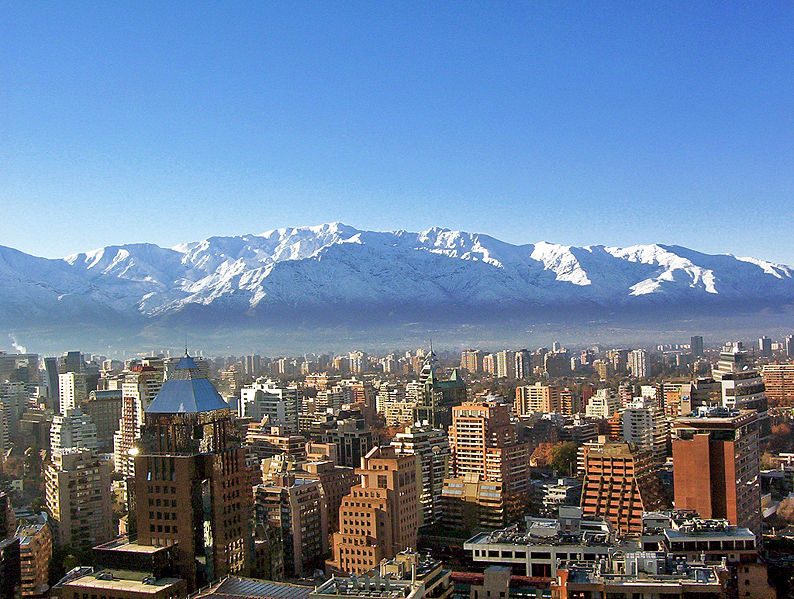
Unfortunately, I forgot completely to tell somebody I was arriving to Chile. So it’s not strange that nobody came to receive me. I had to carry all my heavy stuff (including my drawing and figure out how to get to my relatives house). There are plenty of them living in Santiago, but I don’t visit them too often, only on summer holidays. Santiago is quite a big city in comparison with the rest of Chilean cities. Santiago is located almost in the middle of Chile. A high number of people live in this city. When I got there it was winter season in Chile, so you could not expect to see a beautiful scenery of Santiago.
Santiago de Chile
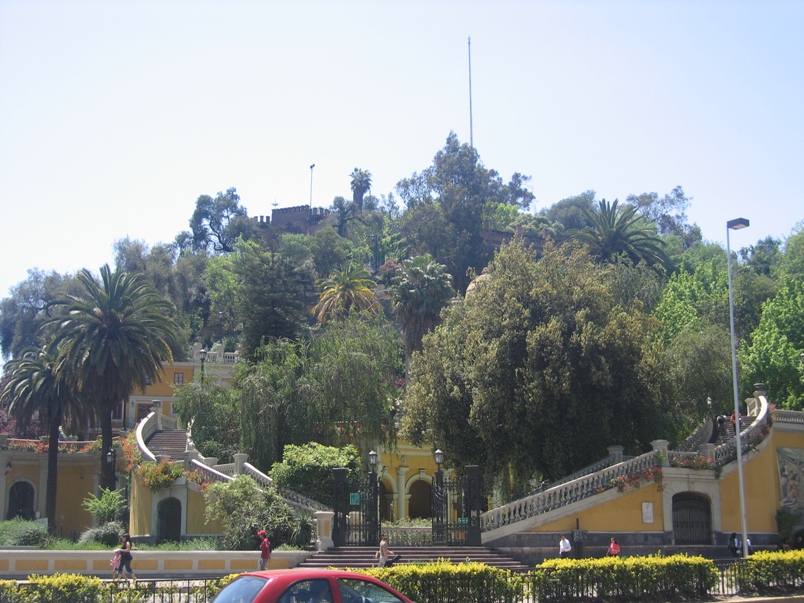
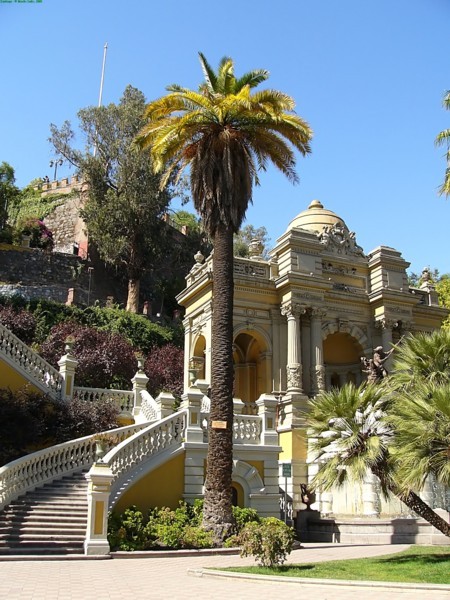
If you want to see beautiful landscapes, I would rather choose the previous region located in the north. (Viña del Mar or Valparaíso) However, I like visiting historical places in Santiago, like “Santa Lucia” hill. This place is located right in front of “Santa Lucía” subway station. You can see “Alameda” street which goes straight along several important locations in Santiago.
Cerro Santa Lucia
It is in the middle of this city. When Spaniards came to South America, an Spanish soldier called “Pedro de Valdivia” founded the city of Santiago on February 12th, 1541. He planned the city according to the traditional Spanish checkerboard layout which is still evident in the downtown area today (and many Chilean cities too ~ Spanish were not too artistic in this aspect… jajaja! ).
Entrada del Cerro! lots of stairs!
This is surely a nice place, with a magnificent entrance. The part I like most is going upstairs and taking a look at the scenery below… I love high places!
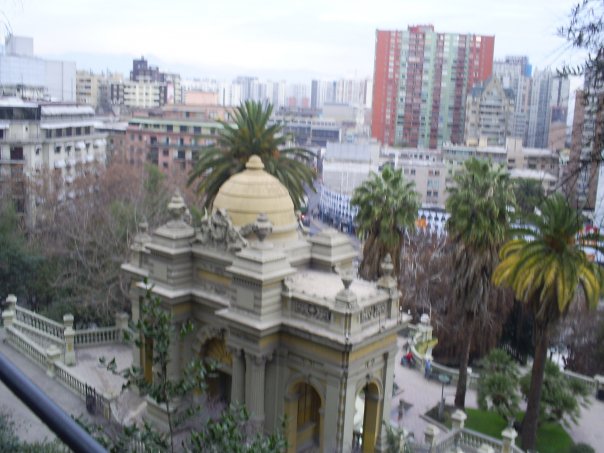
Vista desde arriba
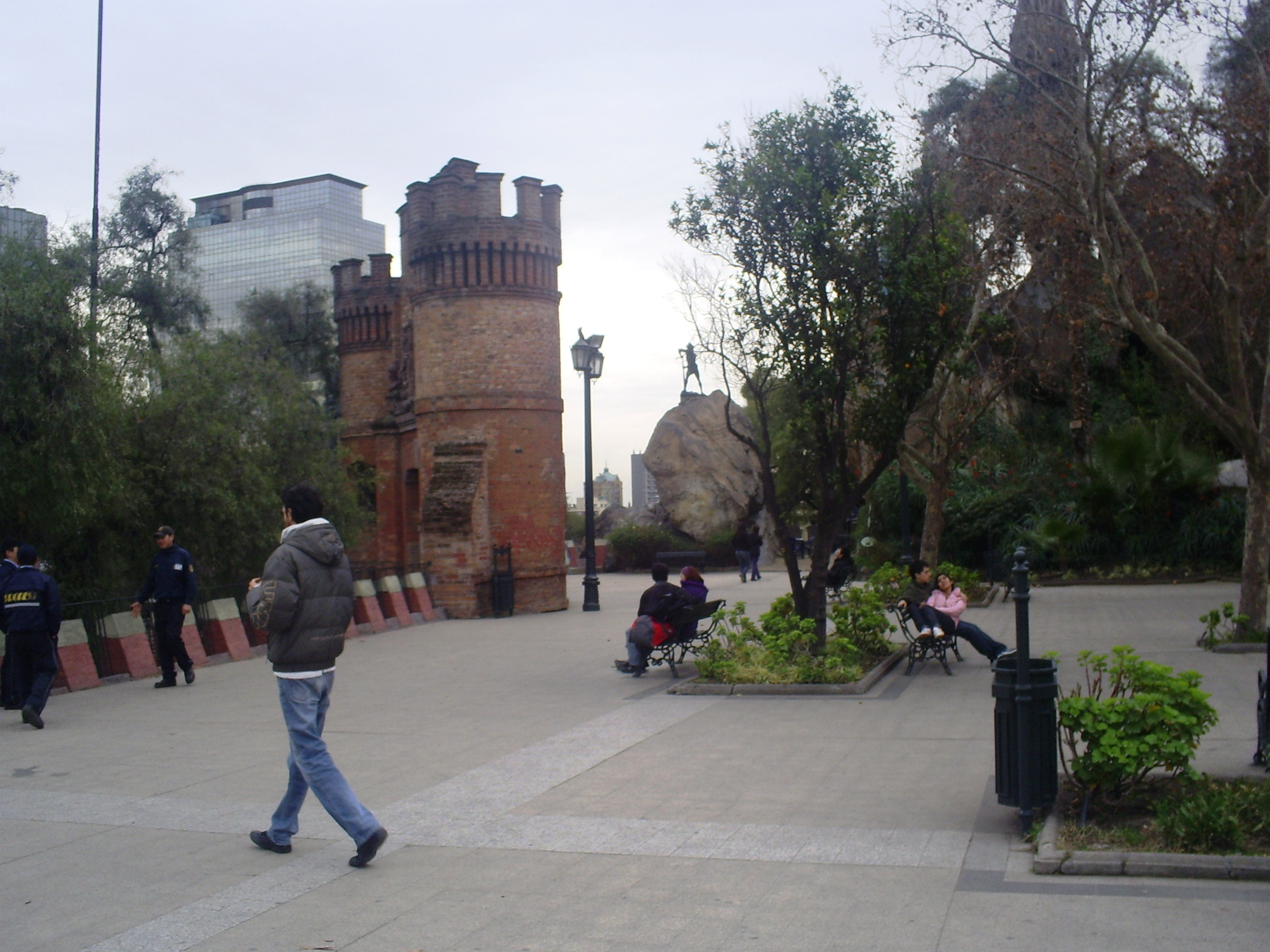
As you keep going up, you can take a look at different levels of “Santa Lucia” hill. Lots of couples like to come here to sit down and talk as they enjoy the view (when you come to Chile, We will visit this place together! just like Chilean pololos! ♥)
Segundo nivel del cerro
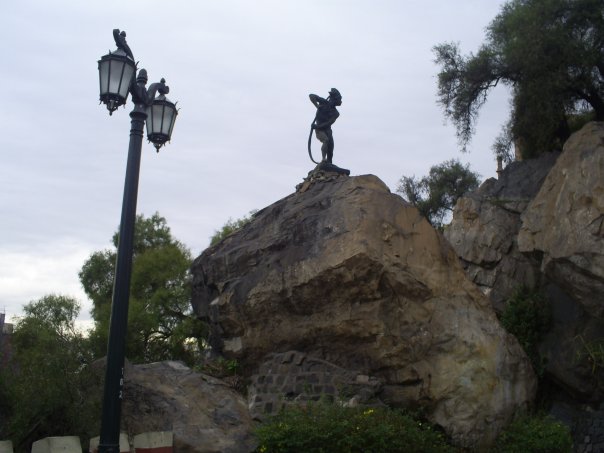
I don’t think it is clear. But the next sculpture is supposed to be a “Mapuche” … the indigenous who were living here before “españoles” (Spaniards). This statue commemorates the famous mapuche called “Caupolican“. He was one of the chief mapuches that fought the spanish soldiers as he didn’t want this land to be conquered by the spaniards. He fought Pedro de Valdivia (founder of the city) again and again, making his plans quite difficult.
Caupolicán: The brave warrior
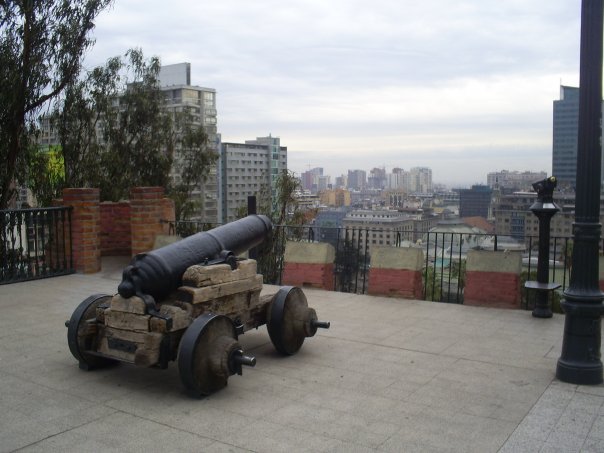
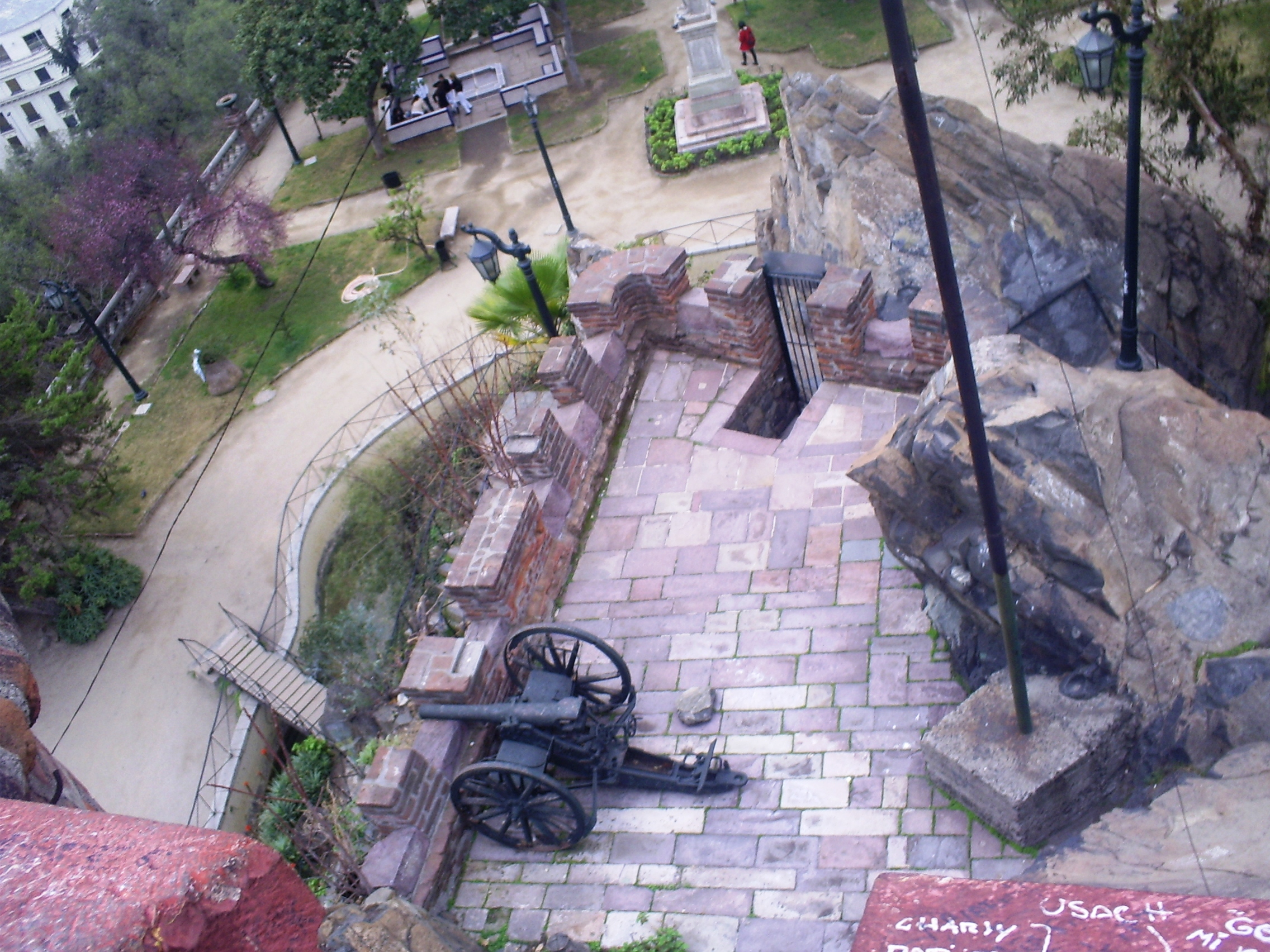
Due to the fact that this place was supposed to be an strategic place for protection, it is not strange that you can see some old “cañones” (cannons) around there.
Spanish Cannons
This is the middle level of Santa Lucia Hill.
Be careful! Don't look downwards !
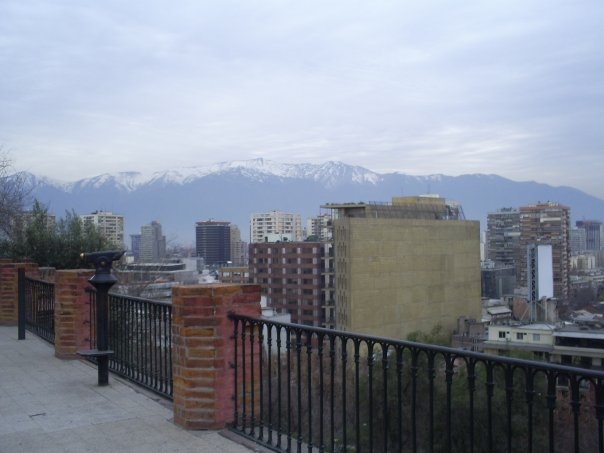
“Los Andes” can be seen in the back of Santiago. I am pretty sure those mountains look gorgeous when it is not cloudy… jaja! The true is I just like taking a deep look around… but cities… are not special… they are almost the same everywhere.. but standing at a high place and looking at it… is quite cool.
Los Andes: Bellas Montañas
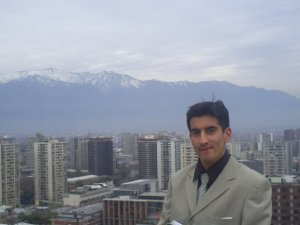
*I got there…. I mean, to the top of this hill. unfortunately, I was doing some secret business alone, so I couldn’t take many pictures including me on them… I asked someone to take a picture of me with “Los Andes” mountains in my back.. At the top of “Santa Lucia” hill. I read somewhere it has around 65 M height.
저는Santa Lucia's Top 에서
I went to Chinese and Korean embassy in order to get some information about the Visa process and costs for when I visit you. For my surprise, it is quite cheap and simple if we compare with the tedious process for applying to USA. I even managed to know that there are some scholarships for Chilean students! ♥ I can’t wait to graduate and apply for them!
Last month, I took my drawings to Dimka’s hometown. It is a small town called “Los Muermos”, which is located a few hours from mine (Actually almost four hours… 😛 ). When I visited Dimka’s house by first time, I promised her to do this art exhibition as soon as possible because she is the most “buena onda” red cheeks girl around there.
Bienvenidos!
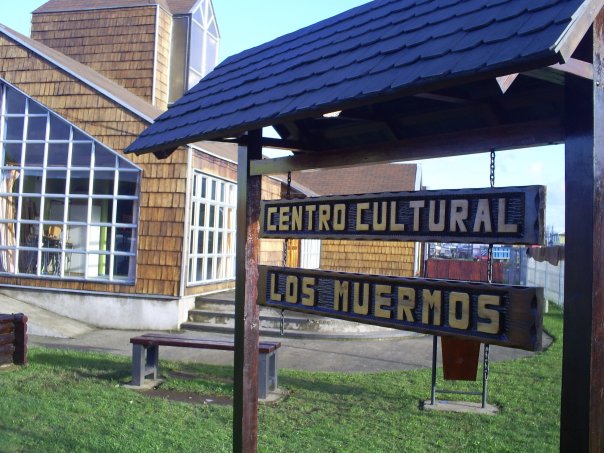
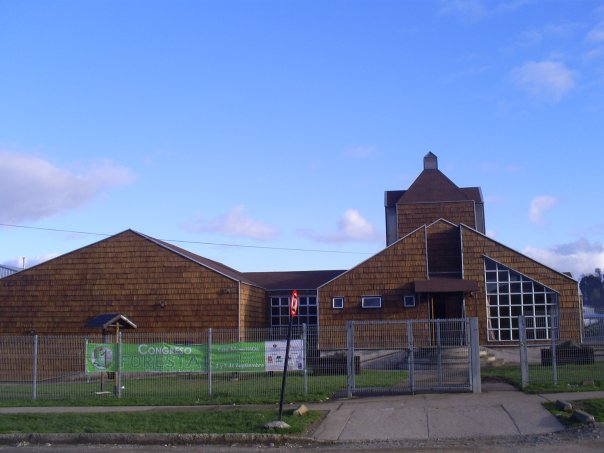
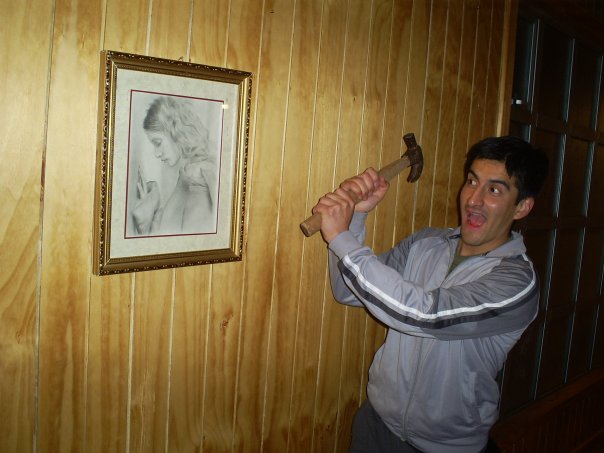
The Cultural Center of Los Muermos is a nice place. Wooden constructions are the most typical characteristic of Southern Cities houses and buildings, because wooden constructions are warmer than concrete. Chilean south can be quite cold during winter. Seen from far it even looks such a big place. That’s the physical place where my exhibition takes place. I really liked it when I visited it. Obviously, I included some of the drawings I made at NSU. Your drawing is my secret artwork which is now being presented at “Pto. Varas” art exhibition. So you won’t be able to see it yet. 😀
Centro Cultural de Los Muermos
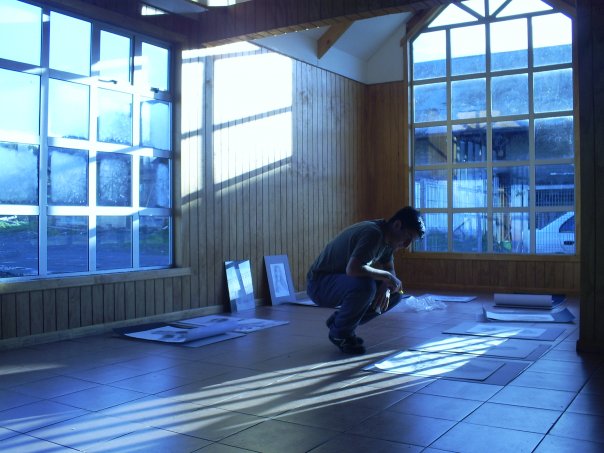
Everything is really close in Los Muermos, so just a a few blocks from Dimka’s house. Fortunately, she helped me to prepare the materials in order to hang each artwork on the hall’s walls. It was not an easy task, it took me almost two days. I started early morning with the preparations and trying to decide where to put each artwork. Dimka joined later.
Early in the morning
However, with some great music we managed to have fun while getting everything done ♫ . It was really funny to decide a name for this art exhibition. Dimka got really surprised when she saw the advertisement around the city inviting people to visit the new artshow called “At Dimka’s” ~ in Spanish, “Donde la Dimka.” So, los Muermos was the center of Chilean Culture during the whole month of September.
Be careful!
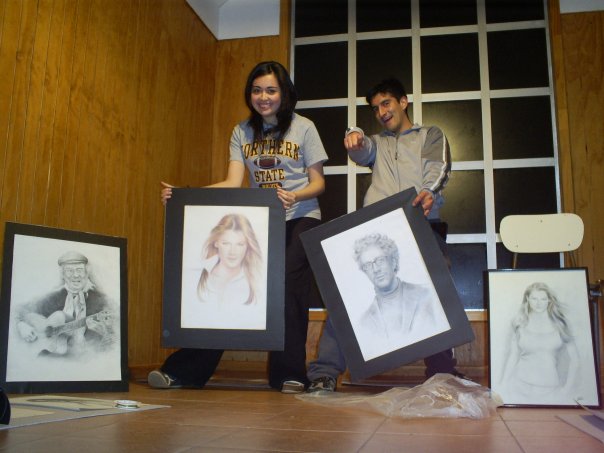
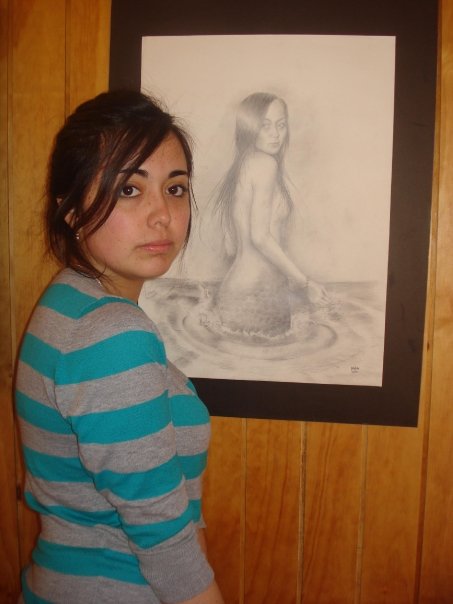
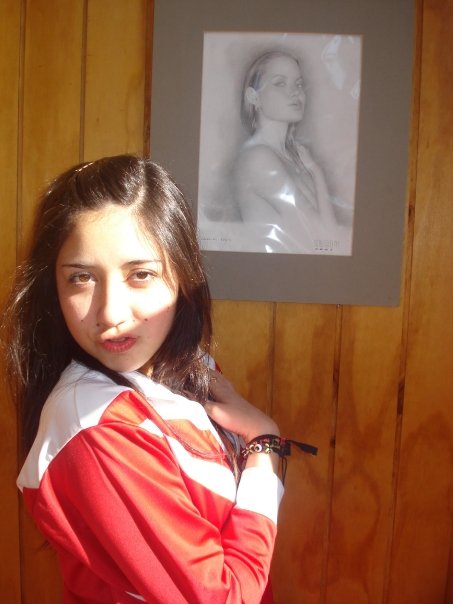
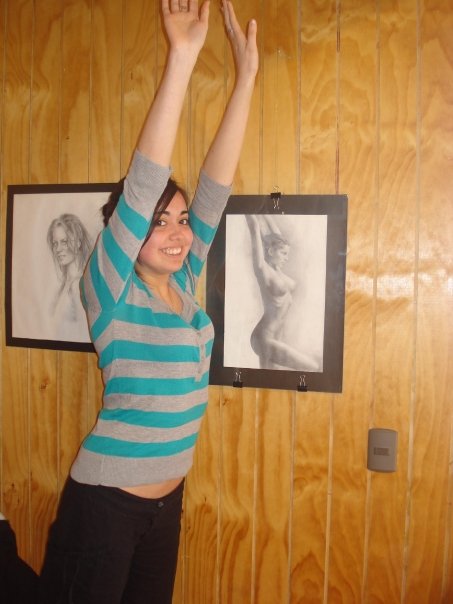
After everything was done, we started to have a great time taking pictures in order to show them to our friends at NSU (on facebook). Dimka “red cheeks” Bahamonde posed next to many of my favourite drawings. I really wished you could be here.
Come to Chile!
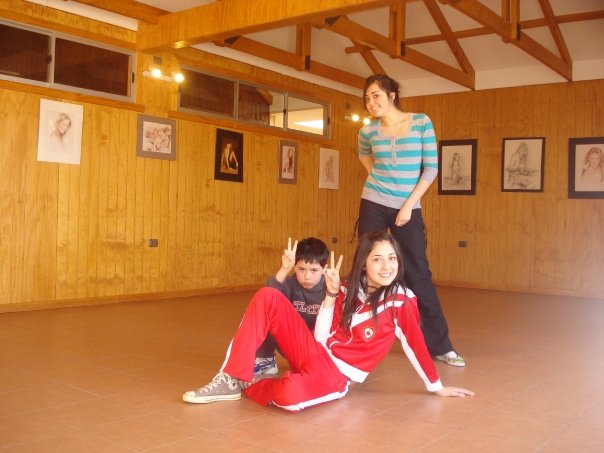
When I went back to my hometown, Dimka was in charge of everything and take care of my lovely drawings. She and her brothers visited the art exhibition together. It seems they had lots of fun playing and acting out ! I really laughed at them!
Dimka's Gang
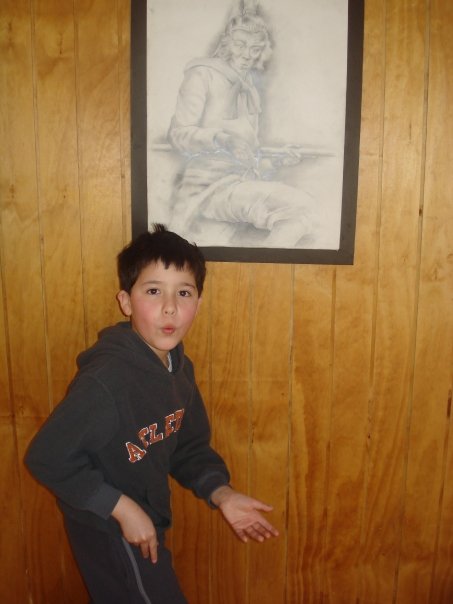
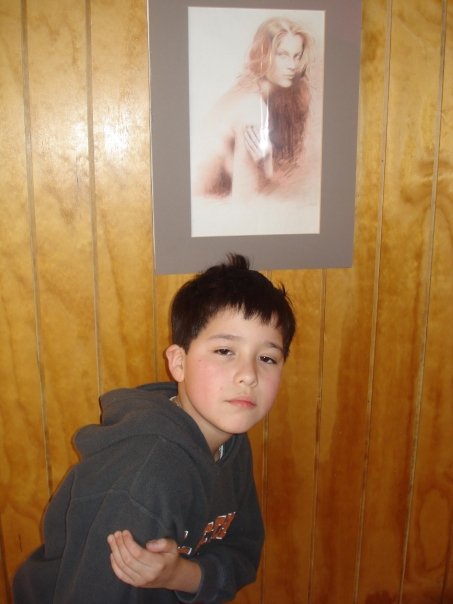
Dimka has two sisters and a little brother. In this ocation, her younger sister and her brother went there and got crazy taking photos.
Joaquin as "Sun Wu Kong"
And they didn’t stop! ♥
Dimka as the "Pincoya" (Chilean mermaid)
What about Maya??
Maya as Angelina Jolie
I almost die of laughing too much due to these photos. Dimka’s sis and bro are so funny…! ♫
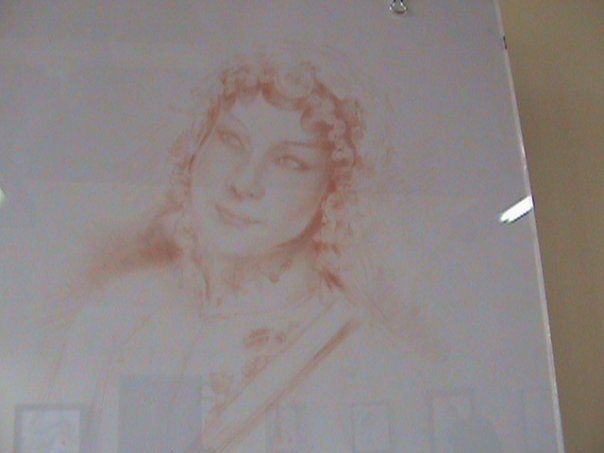
Dimka as Laetitia Casta
And finally… the next Chilean top fashion model: Joaquín ♪
Joaquín... the potential Giocondo!
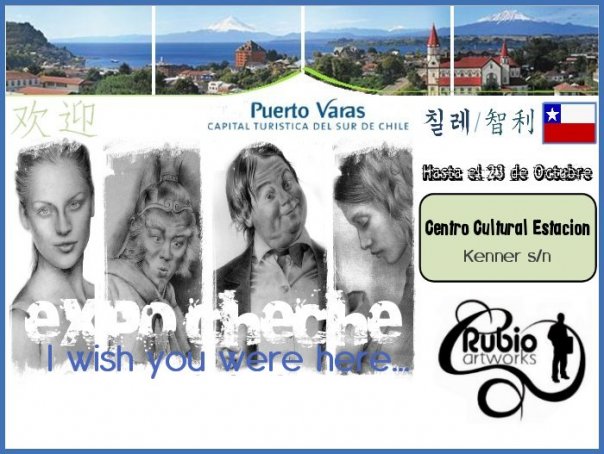
You cannot miss “Puerto Varas” Art exhibition titled: “I wish you were here” ♥
Well, like most of South American countries, every year we have the chance to celebrate and remember the historical events which took place almost two hundred years ago related with the attainment of our freedom from Spanish rule. In the previous letter I wrote you, I mentioned in general terms how we got rid of Spanish and took them out of South America.
Abrazo de Maipu (at Maipu's famous hug)
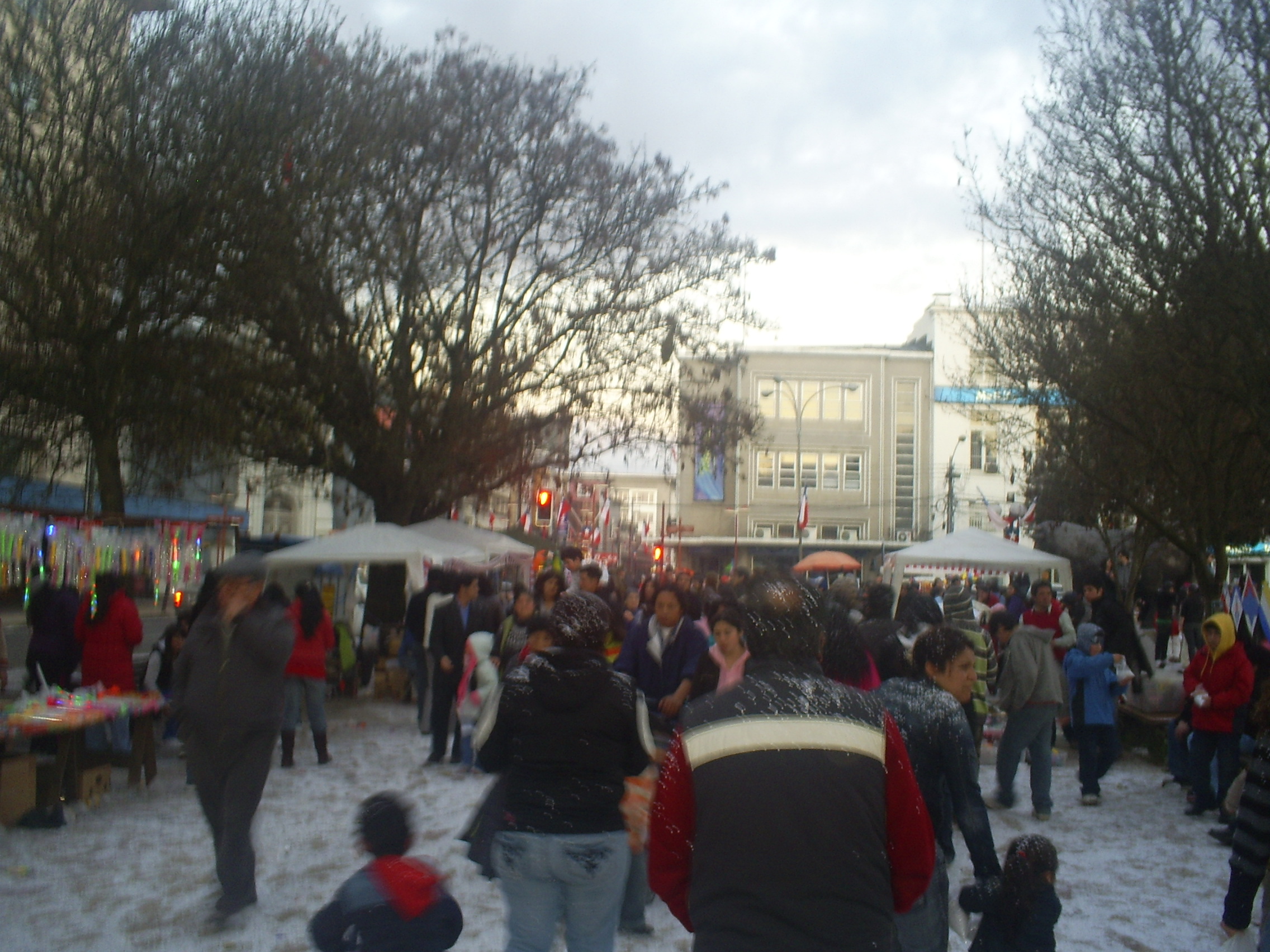
In general, Chileans are quite lively but if we compare us with brasileños (Brazilians), we seem to be a little bit cold (could you believe that?). Everything changes when September 18th comes. All the people look even more friendly or glad, and that’s because we have almost a whole week to rest and have fun. In every house there is a Chilean flag fluttering indicating that September is the month of independence. At elementary schools and high schools, children and adolescent participate in special activities related with these festivities. So, The “fiestas patrias” (literally “patriotic parties”) are a time for all Chileans to gather together and celebrate their country, culture, and independence. Celebrations of all things Chilean center on their independence day.
Sept 18th at Osorno
The 18th, or “dieciocho,” is celebrated during a week full of fiestas patrias. This includes parades, dances, drinking, eating traditional Chilean food, and music. Parades include “huasos“, the traditional Chilean cowboys, music, and displays of national pride.
Fonda de Osorno
Much of the celebrations occur in “ramadas“, temporary open buildings with thatched roofs traditionally made from tree branches. Ramadas feature a dance floor, music, and tables to eat. In the past, around two hundred years ago, people from country side were particularly known for celebrating “fiestas patrias” this way. In the modern Chile, it is more suitable to talk about “fondas” or refreshment stands, offering a wide variety of Chilean food including empanadas, anticuchos (shish kabobs), chicha (alchoholic drink), and more.
Empanadas & Vino Chileno
Okay, there are three things which are directly associated with dieciocho and they are “empanadas, ” “vino” & “cueca.” Empanadas are probably (and even ironically-funny to mention) some dish derivation of a Spanish food. They reminded me to those Chinese dumplings I tried at NSU once. At that time Chinese boiled them… I think I didn’t like them because of that. Empanadas are quite similar but quite bigger, and they can be put in the oven and baked or even fried. It is possible to find “empanadas de pino,” turnover stuffed with diced beef, onions, raisins, olive, and hard boiled egg. There are also “empanadas de marisco” (instead of beef… they use seafood) and my favourite ones, “empanadas de queso,” turnover filled with cheese and usually fried. Vino (wine) is surely one of the most emblematic characteristic of Chilean products. Unfortunately, I am not good enough to appreciate Chilean wine because I do not drink very often, but everybody loves our wine. 😀
Matias, The Chilean Huaso! ♪
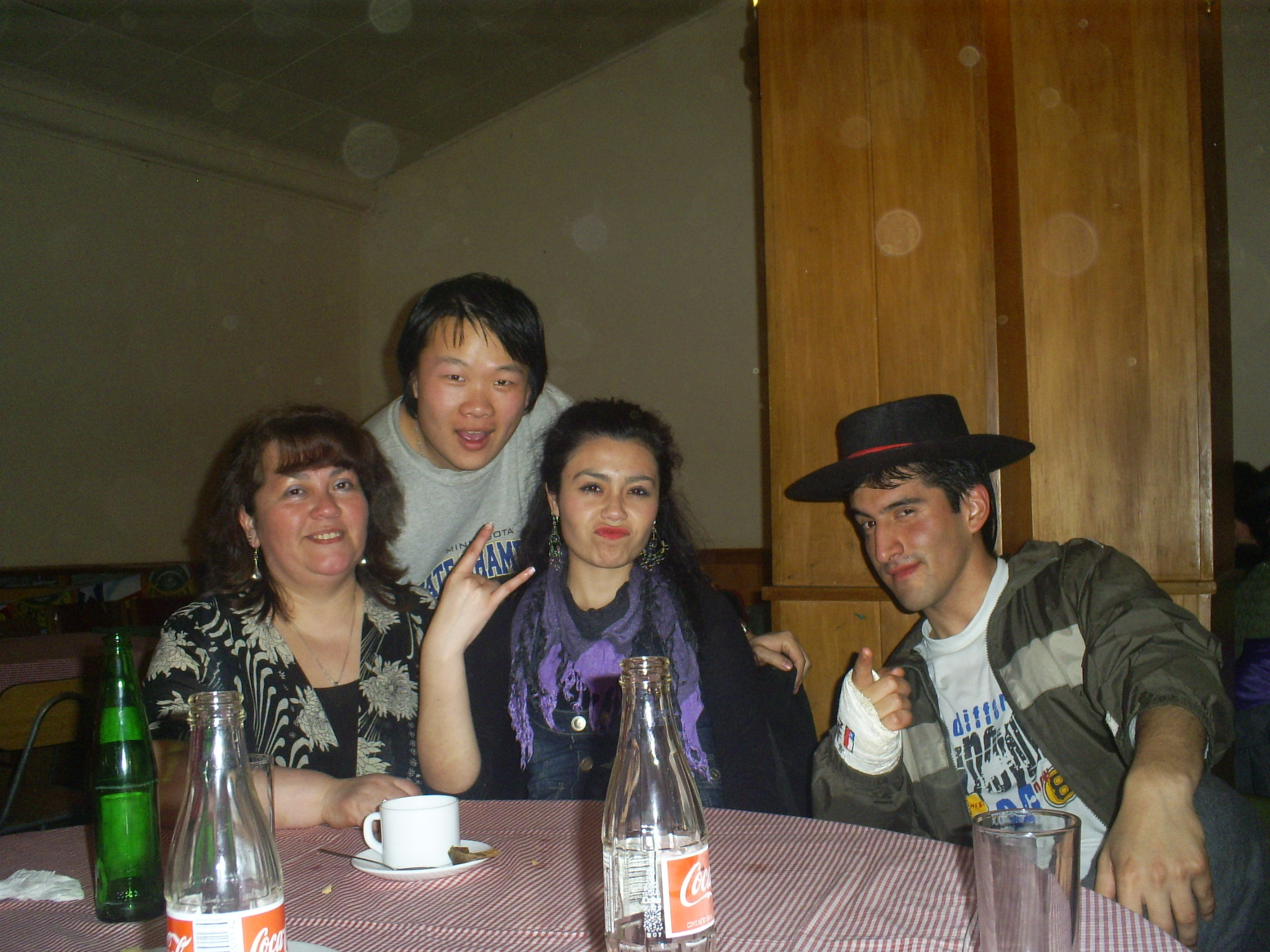
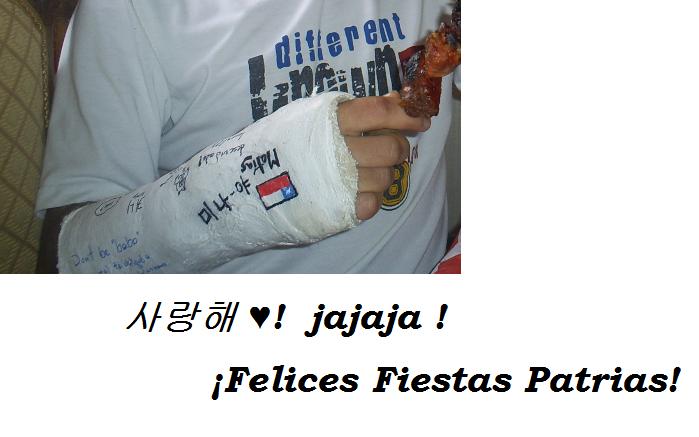
I went to Osorno and stayed there the whole weekend celebrating with my friends. We had lunch together and tried some traditional food. At that moment, I was wearing some plaster on my wrist because I had broken it some weeks ago. It was quite strange and funny to do all those common activities like eating and writing with my left hand. It is just like getting use to it. Actually, I managed to use my left hand properly, except by drawing. That was impossible.
Matias con brazo enyesado
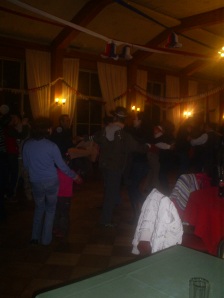
A Chinese friend of mine “Mario” and her girlfriend participated in a Cueca Contest. I taught him some moves and guess what! he got the third place! ♫ It was very funny to see a Chinese guy dancing cueca… and he did quite well! after that, we visited a Traditional “Fonda”, and we ate some empanadas, and danced a lot…! Some dance groups performed all Chilean traditional dances including those from Easter Island. Obviously, I danced every kind of music style they put on!
Cueca
Well, if there is something I really like it is cueca. Like every country, there is a particular traditional dance which is very popular. I am pretty sure that Korea also does have one right? What is particular from South American dances, as I probably mentioned to you before, is the idea of “cortejo” – courtship – (wooing, the attempt to make a woman or man to fall in love with you). In fact, I am almost sure that almost a 99% of South American dances are meant to be danced by couples (isn’t that cool? I couldn’t conceive not having a lovely woman to dance with! ♥). Thus, Cueca is not an exception. In the following picture, you can see me dancing like a real Chilean should do… with a lovely partner. I am wearing a typical cowboy hat, but I didn’t get a complete costume… lol Anyways, it doesn’t matter when you can make a good performance dancing ! ♫ and I try hard to make it alright! ♥
I surely can dance the whole night ♫
The man tries to make the woman to notice him while he uses a handkerchief. He moves the handkerchief while he performs some dance steps around the woman. Obviously, he needs to be quite brave and passionate to success. The problem is that the woman doesn’t seem interested at first. She just smiles and tries to avoid the man’s advances towards her. That’s why he must persist and follows her not letting escape… that’s quite funny. There is just when the audience must clap to cheer up the man! ♫ Little by little the woman begins to smile and show her charming joy. She subtly accepts the man’s advances while joining to the rhythm of his moves until they get together…! ♥ Probably, cueca shows somehow our romantic and persistent personality when it is about falling in love with a charming and lovely woman like you (for instance ;-D ).
Cueca de Salon
There are different types of cuecas, depending of the geographical situation. The following one is the classic cueca. The huaso and the huasa are wearing a formal dress. it is not the popular one, but surely the one you see in most of important events.
Traditional Cueca
In traditional and classic cueca, the man invites the woman to dance. As you can see below, the costume is quite different for the woman and sometimes for the man too. I personally preffer this one because the woman’s dress is more colorful, and the cueca itselfs can be sometimes even more interesting (in the sense that the man can perform more straight or direct dance moves as an attempt to show his interest towards the lady.
Cueca Chora
This is a more contemporary cueca style. I guess it comes from Chilean central part near the capital city. It is called “chora” (because it means to be direct, to dare) so the man and the woman are evidently more passionate for make his or her partner to fall in love. You can see that they are wearing modern clothes (and I really regret for not having remembered to perform this cueca style at NsU when Lin Lin asked me to do it). It shares some similarities with “Tango” in the way that Woman and Men are trying to seduce and vividly show their passion as a way to impress the other person. In addition, the women dress is quite provocative and beautiful isn’t it?
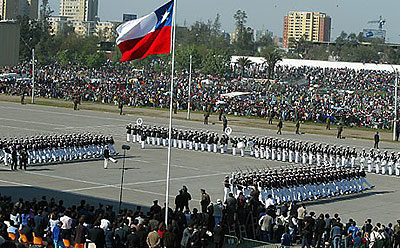
Armed Forces Day
Army parade
The day after Independence Day is also a national holiday. Armed Forces day includes military and naval parades and events celebrating Chile’s military victories including their independence. Personally, I don’t like army and all that weapons stuff, but it is quite relevant to mention that Chilean pride is also strongly related by our previous victories during our independence period and the post independence period too. There were several battles against Spanish, Peruvians and Bolivians for a long time. We were known for our naval strength, but also a deep braveness in the war. The most precious traditional emblem for us is Chilean flag. It represents a strong affection towards our nation and freedom. That’s why Chilean soldiers had the pride to say that they never gave up during battle and even died protecting their flag.
In brief, I really wish that someday you could come and celebrate this festivities with me, that should be really great! what are you waiting for?? 🙂



















 Rubio's Official Weblog